

Key Takeaways
- Wiring panels in series adds their voltages together while current stays the same; wiring in parallel adds current while voltage stays the same.
- Series strings suit long cable runs and most string inverters because higher voltage means lower current and thinner, cheaper wire.
- Parallel wiring keeps voltage low and is common in 12V/24V off-grid and battery setups, but demands thicker cable and fuses on each string.
- Real arrays usually combine both: series strings wired in parallel, chosen to land inside your inverter's MPPT voltage and current window.
- Always match panels of the same wattage, size the wire for the real current, and respect DC voltage limits for safety.
Understanding series vs parallel solar wiring is the single decision that most quietly makes or breaks a rooftop system. Get it right and your inverter runs in its sweet spot all day; get it wrong and you either trip the inverter's voltage limit or waste power in undersized cable. I am Arjun Mehta, and over a good number of residential and small commercial installs across India I have wired panels every way you can. In this guide you will learn exactly how series and parallel connections change voltage and current, when to use each, how to wire a string step by step, and how to keep the whole job safe.
The one idea that makes wiring click
Every solar panel has two numbers that matter here: its voltage (measured in volts) and its current (measured in amps). How you connect panels decides whether you stack the voltages, stack the currents, or a bit of both. Power stays the same either way, but voltage and current behave very differently in a wire.
Think of it like water. Voltage is the pressure, current is the flow rate. Series wiring raises the pressure; parallel wiring widens the pipe. Your inverter only accepts a certain pressure and flow range, so your wiring job is really about matching the panels to that window.
Wiring panels in series: voltage adds up
When you wire panels in series, you connect the positive terminal of one panel to the negative of the next, like links in a chain. The voltages add together while the current stays equal to a single panel. This chained group is what installers call a string.
Say each panel is 40V and 10A. Put four in series and you get 160V at 10A. The higher voltage is a gift for long cable runs, because lower current means less loss and thinner wire. This is why most grid-tied string inverters expect panels wired in series.
The catch with series is shading. Because the current in a string is limited by the weakest panel, one shaded or dirty panel drags the whole string down, though modern panels have bypass diodes that soften this. It also means your string voltage on a cold, sunny morning can spike well above the rated number.
Warning: A solar string carries live DC even in daylight with the inverter off, and cold weather pushes string voltage higher than the label. Always check open-circuit voltage against your inverter's maximum DC input before connecting, use rated MC4 tools, and never work on live DC in wet conditions. If you are not confident with mains and DC wiring, hire a certified installer.
Parallel panel wiring: current adds up
In parallel panel wiring you connect all the positive terminals together and all the negative terminals together. Now the currents add while the voltage stays the same as a single panel. Four 40V, 10A panels in parallel give you 40V at 40A.
Parallel shines when you must keep voltage low, which is the norm in 12V and 24V off-grid and battery systems, or with certain low-voltage charge controllers. Shading is friendlier here too: a weak panel only loses its own share of current, not the whole array's.
The downside is heavy current. Forty amps needs thick, expensive copper and, once you parallel three or more strings, a fuse or breaker on each string so a fault in one cannot back-feed through the others. On a hot Indian rooftop that fusing is not optional, it is safety.
Series vs parallel: a side-by-side comparison
Here is how the two approaches stack up on the factors that actually decide your wiring plan. Use it as a quick reference when you are staring at your inverter's datasheet.
| Factor | Series wiring | Parallel wiring |
|---|---|---|
| Voltage | Adds up (panels stacked) | Stays the same as one panel |
| Current | Stays the same as one panel | Adds up (panels combined) |
| Best for | Grid-tied string inverters, long runs | 12V/24V off-grid, battery banks |
| Cable thickness | Thinner (low current) | Thicker (high current) |
| Shading impact | Whole string drops to weakest panel | Only the shaded panel loses output |
| Extra protection | String fuse if strings paralleled | Fuse per string with 3+ strings |
Series-parallel: the real-world combination
Almost no home array is purely one or the other. In practice you build series strings to reach a healthy voltage, then wire two or more of those strings in parallel to reach the current and power you want. This is called a series-parallel configuration.
When I commissioned a 5kW rooftop on a two-storey home in Pune, the inverter wanted its MPPT input between roughly 120V and 500V. Twelve 40V panels in one series string would have hit around 480V, uncomfortably close to the ceiling on a cold morning. So I split them into two strings of six (about 240V each) wired in parallel. That kept voltage safe and doubled the current cleanly.
The golden rule for series-parallel: every parallel string must have the same number of panels and the same panel model, so all strings sit at the same voltage. Mixing string lengths forces current to flow between strings and wastes power. To get the string count right for your roof, start with our companion walkthrough below.
How to wire a solar string, step by step
This is the workflow I follow on site. It assumes a small grid-tied array with a string inverter, but the logic carries over to off-grid too.
- Read both datasheets. Note the panel's open-circuit voltage (Voc) and short-circuit current (Isc), and the inverter's maximum DC input voltage, MPPT range, and maximum input current.
- Plan your string length. Multiply panel Voc by the number in series and add a cold-weather margin. Keep the total safely below the inverter's maximum DC voltage.
- Confirm the current. Add the Isc of every parallel string. Stay under the inverter's maximum input current per MPPT.
- Mount and ground first. Fix all panels and bond the frames to earth before you touch any DC connectors.
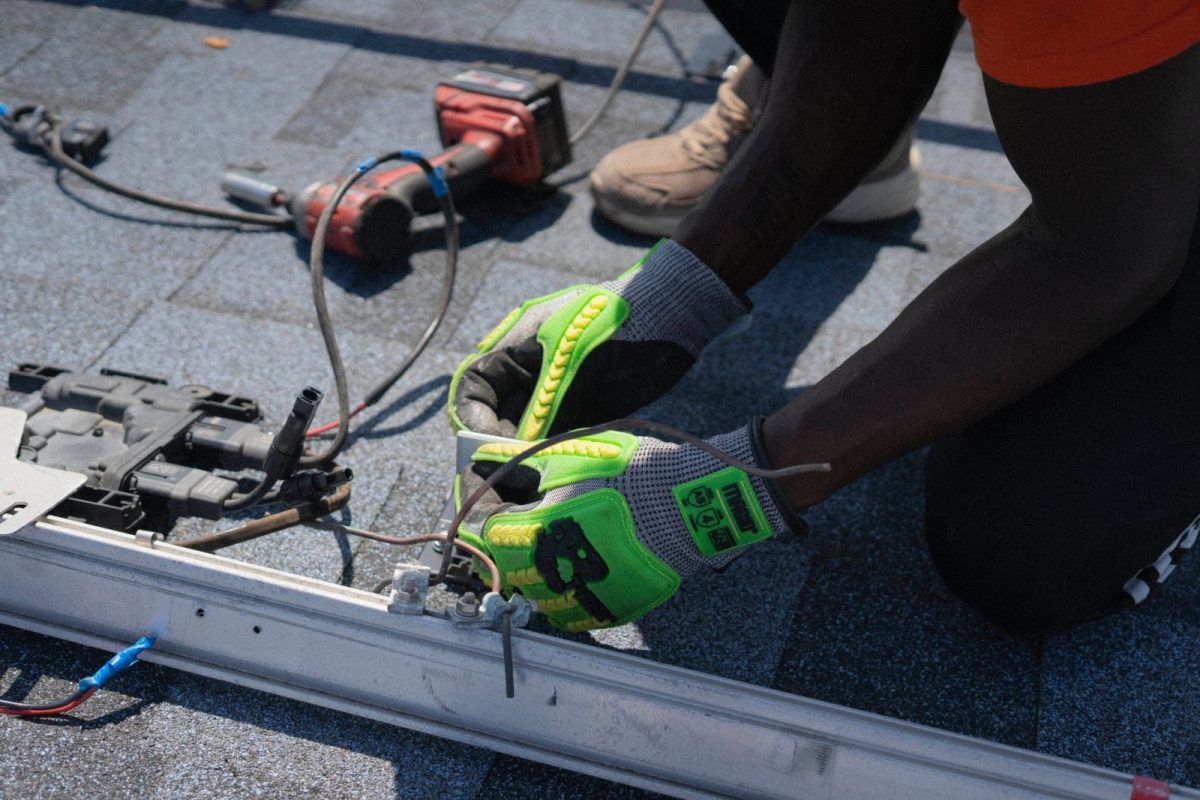
- Wire the series links. Connect positive of one panel to negative of the next using factory MC4 leads until the string is complete.
- Combine strings in parallel. Join the string positives and negatives, ideally in a combiner box, adding a fuse per string where three or more strings meet.
- Measure before you energise. With the inverter off, check string Voc with a meter. It should match your calculation. Only then connect to the inverter and switch on.
Tip: Do your Voc maths for the coldest expected morning, not a warm afternoon. Panel voltage rises as temperature falls, and I have seen a string that looked fine at noon push the inverter over its limit at 6am in a north Indian winter. A small margin here prevents a very expensive surprise.
Common wiring mistakes I see on Indian rooftops
Over a few installs and many service calls, the same handful of errors keep showing up. Mixing panel wattages in one string is the top one, because the string then runs at the weakest panel's current. Undersizing the DC cable for parallel current is a close second, and it shows up as hot cables and lost yield.
Loose or dirty MC4 connectors cause arcing and are a genuine fire risk over time. And skipping string fuses when paralleling three or more strings leaves no protection if one string faults. None of these are hard to avoid; they just need a little planning and the right components.
Matching your wiring to the rest of the system
Wiring choice does not live in isolation. Your array size, your roof's tilt and orientation, and your inverter's MPPT window all pull on the same string plan. Size the array first, then shape the strings to fit the inverter, then confirm the panels face the sun well enough to actually hit those numbers.
If you want the full picture from panels to protection, our complete guide to solar panels ties every piece together. For string maths specifically, walk through how to size a solar panel array for your home, and to make sure your panels earn their rated output, read up on tilt and orientation for solar panels in India. For our editorial standards, see the about page.
For official quality and safety expectations on grid-connected systems, India's Ministry of New and Renewable Energy is the authoritative reference, and the U.S. National Renewable Energy Laboratory publishes solid background on how temperature affects panel voltage.
Frequently Asked Questions
Is series or parallel better for solar panels?
Neither is universally better. Series suits grid-tied string inverters and long cable runs because higher voltage means thinner wire. Parallel suits low-voltage 12V or 24V off-grid and battery systems. Most real arrays combine both to fit the inverter's voltage and current window.
Does wiring panels in series increase voltage?
Yes. Wiring panels in series adds their voltages together while the current stays equal to a single panel. Four 40V panels in series produce 160V. This is the standard approach for grid-tied string inverters, which need a high input voltage to operate efficiently.
Can I mix panels of different wattage in one string?
You should not. In a series string the current drops to that of the weakest panel, so mixing wattages wastes power. In parallel, mismatched voltages cause current to flow between strings. Always use identical panels within a string for clean, predictable output.
Why does shade hurt a series string so much?
In series, every panel carries the same current, so one shaded panel limits the whole string. Bypass diodes reduce the loss, but the string still drops. Parallel wiring isolates each panel, so shade on one only reduces that panel's contribution to the array.
Do I need fuses when wiring panels in parallel?
With two parallel strings you usually do not, but from three strings upward each string needs a fuse or breaker sized to the panel. Without it, a fault in one string can be back-fed by the others, exceeding the cable's rating and creating a fire risk.
Conclusion
Series stacks voltage, parallel stacks current, and a smart series-parallel plan lands your panels right inside the inverter's happy range while keeping cables and costs sensible. Read your datasheets, do the cold-morning voltage maths, fuse your parallel strings, and measure before you energise. Do that and the wiring becomes the boring, reliable part of your system. When you are ready to plan the whole array, start with our complete guide to solar panels and build from there.