


Key Takeaways
- How many solar panels for a house? Most Indian homes need roughly 3 to 5 kW of solar, about 6 to 10 panels at 550W each.
- Your monthly electricity units (kWh) decide the number, not the size of your house or family.
- In most of India, 1 kW of rooftop solar generates about 4 to 4.5 units a day, so a 3 kW system covers a 300-unit monthly bill.
- Higher-wattage panels (540W to 575W) mean fewer panels and less roof space for the same output.
- Plan for roughly 100 sq ft of shadow-free roof per kW when you count real installed area.
The first question almost every homeowner asks me is how many solar panels for a house they actually need. The honest answer is that it depends less on the size of your roof and more on the number sitting at the bottom of your electricity bill. I have sized systems for a 2 BHK flat that needed just three panels and a large independent house that swallowed eighteen. In this piece I will walk you through the same back-of-the-envelope math I use on site visits, so you can land on a real number before any salesperson quotes you one.
Start with your electricity bill, not your roof
Pull out your last three or four electricity bills and look for units consumed, printed in kWh. Average them out to get a fair monthly figure. Summer months with air conditioning will spike, so a yearly average keeps you honest.
Here is the rule I lean on for most of India: one kilowatt of rooftop solar produces about 4 to 4.5 units per day, or roughly 120 to 135 units a month. That figure already accounts for typical losses from heat, dust, wiring, and inverter conversion. So if your home burns 300 units a month, you need a system that makes 300 units, and that points to about 3 kW.
Once you know the kilowatts, the panel count is simple division. Divide your system size by the wattage of one panel. A 3 kW system built with 550W panels needs about six panels (3000 divided by 550 rounds up to six).
Panel wattage changes the count
People fixate on the number of panels, but two homes with identical bills can end up with very different counts. The reason is panel wattage. In 2026, most Indian residential installs use mono PERC or TOPCon panels rated between 400W and 575W. A higher-wattage panel does the same job with fewer units on the roof.
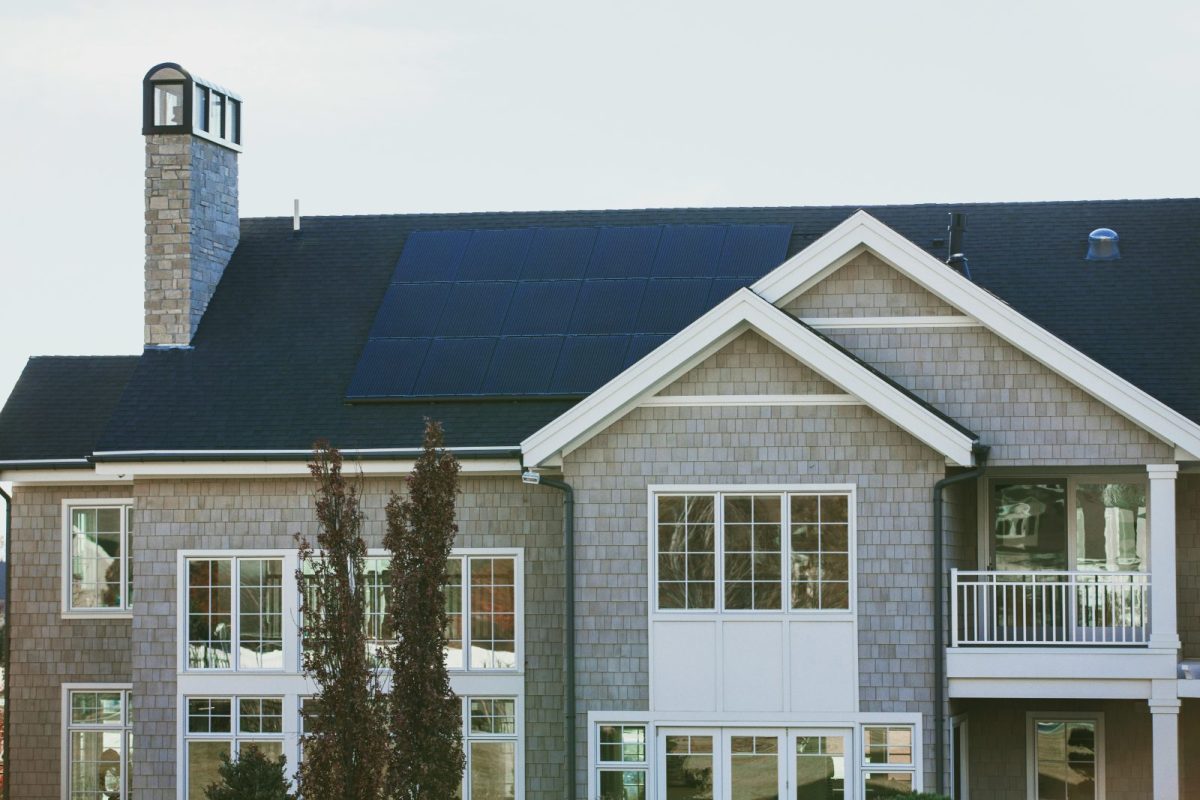
For a 5 kW system, that difference is real. With older 330W panels you would need about fifteen. With modern 550W panels you need nine or ten. Fewer panels means simpler wiring, fewer clamps, and less roof to keep clean. If you are tight on space, ask your installer for the highest-wattage panel that fits your budget.
A sizing table you can use today
The table below maps common monthly bills to a system size, an approximate panel count using 550W panels, and the shadow-free roof area you should plan for. Treat these as starting points, then adjust for your real bill and any plans to add an EV or a second AC.
| Monthly units (kWh) | System size | Panels (550W) | Roof area (approx) |
|---|---|---|---|
| Up to 150 | 1 to 1.5 kW | 2 to 3 | 100 to 150 sq ft |
| About 300 | 3 kW | 6 | 300 sq ft |
| About 500 | 5 kW | 9 to 10 | 500 sq ft |
| About 800 | 8 kW | 15 | 800 sq ft |
| 1000 and above | 10 kW | 18 to 19 | 1000 sq ft |
Notice the roof area column follows a clean thumb rule: roughly 100 sq ft of usable, shadow-free roof per kilowatt. The panels themselves take less space than that, but you also need walkways, tilt gaps between rows, and clearance from parapet walls and water tanks.
Tip: Under the PM Surya Ghar scheme, the central subsidy is capped at a 3 kW system size (about 78,000 rupees). If your bill sits near 300 units, a 3 kW system captures the full subsidy while covering almost your entire consumption. Going slightly bigger past that point is fine, but the extra capacity is unsubsidised.
Sunlight and roof direction matter too
My 4 to 4.5 units per kW figure assumes a decent, mostly south-facing roof with clear sky access. India is generous with sun, averaging 4 to 5 peak sun hours across most states, but your specific roof can shift the math.
Shade is the silent killer. A single water tank, a neighbour's rising wall, or a tree branch that shades panels for even two hours a day can drag output down noticeably. If part of your roof gets shaded, you either lose those panels or add a few extra to make up the shortfall. Panel-level optimisers or microinverters help, but the cleanest fix is choosing a spot that stays sunny from roughly 9 am to 4 pm.
How to size your system in five steps
- Average your last 12 months of electricity units (kWh) from your bills to get a monthly figure.
- Divide that monthly figure by 120 to estimate the system size in kilowatts (300 units divided by 120 is 2.5 kW, round up to 3 kW).
- Pick a panel wattage, usually 540W to 575W for new installs, and divide system watts by panel watts to get the panel count.
- Multiply your kW by 100 to check the shadow-free roof area you need in square feet.
- Add a small buffer of 10 to 15 percent if you plan to add an EV charger, a new AC, or a battery later.
What this looked like on a real house
When I sized my own rooftop system, our bills averaged around 480 units a month with two ACs running through the Pune summer. The math pointed to 4 kW, but I rounded up to a 5 kW system because I knew an EV was coming within a year.
That worked out to nine 550W panels across about 500 sq ft of terrace. In peak months the system now makes close to 700 units, and my grid import in winter is nearly zero thanks to net metering. If I had sized strictly to the old bill, I would be adding panels now instead of relaxing. Slight, deliberate oversizing paid off.
Safety warning: Solar panels and their DC wiring carry live voltage the moment sunlight hits them, and there is no on switch to make them safe. Never attempt roof mounting, DC connector work, or mains tie-in yourself. Use an MNRE-empanelled installer, insist on proper earthing and a DC isolator, and let a licensed electrician handle the grid connection.
Don't forget cost and the bigger picture
Panel count is only half the decision. The wattage, brand, and technology you choose feed directly into what you pay per watt and how the system performs over 25 years. Before you finalise a quote, it helps to understand price per watt and total returns.
For the wider context on choosing, mounting, and maintaining panels, see our complete guide to solar panels. To dig into the numbers, our breakdown of solar panel cost per watt in India shows how wattage affects your bill of materials. And if you want a real-world sizing story, my write-up on building a 5 kW rooftop system covers the decisions behind the panel count.
Higher-efficiency panels can also trim your count. If roof space is tight, our comparison of TOPCon, PERC, and HJT panels explains which technology squeezes the most watts from each square foot. For official subsidy rules and applications, check the government PM Surya Ghar portal and the MNRE website.
Frequently Asked Questions
How many solar panels do I need for a 3 BHK house in India?
A typical 3 BHK home consuming 300 to 400 units a month needs a 3 to 4 kW system, which is about six to eight panels at 550W each. The exact number depends on your appliances and AC usage, so size to your actual bill rather than the number of bedrooms.
Can 6 solar panels run a whole house?
Six 550W panels make roughly a 3 kW system, generating about 360 to 400 units a month in most of India. That covers a full house with moderate usage, including fans, lights, a fridge, and one air conditioner. Heavy AC or EV charging would need more panels.
How much roof area do I need for solar panels?
Plan for roughly 100 square feet of shadow-free roof per kilowatt. A 3 kW system wants about 300 sq ft and a 5 kW system about 500 sq ft. The panels are smaller than that, but you also need walkways, tilt spacing, and clearance from tanks and walls.
Should I oversize my solar system?
A modest buffer of 10 to 15 percent is smart if you expect to add an EV, a new AC, or a battery. Beyond that, extra capacity past 3 kW loses central subsidy and may exceed what net metering allows in your state, so check local rules first.
Do more panels always mean more savings?
Not always. Once your system offsets your full bill, extra panels only pay back if your state credits exported units fairly under net metering. In areas with net billing at a lower export rate, sizing close to your consumption gives the best return per rupee spent.
Sizing it right the first time
Work backward from your bill, pick a sensible panel wattage, and add a small buffer for the future. For most Indian homes that lands somewhere between six and ten panels, and the sizing table above gets you a defensible number to take into any quote. When you are ready to compare panels, subsidies, and mounting options in depth, our solar panel guide walks you through the rest of the decision.


