

Key Takeaways
- Dust and bird droppings can shave 15-25% off your output in dry, dusty parts of India before you ever notice it on your bill.
- Clean in the early morning or evening when panels are cool, never at midday when the glass is hot and water leaves mineral spots.
- Use plain water and a soft brush or squeegee. Skip detergents, hard tap water, and anything abrasive that scratches the anti-reflective coating.
- Never spray high-pressure water, never walk on modules, and always treat the DC side as live during daylight.
- Monitor your generation data first. If a gentle rinse does not restore output, the problem is likely wiring or shading, not dirt.
If you have ever wondered how to clean solar panels without scratching the glass or getting a shock, you are asking the right question at the right time. I am Arjun Mehta, and over years of commissioning and servicing rooftop systems across India I have seen more output lost to plain dust than to any faulty component. The good news is that panel cleaning is genuinely simple and safe once you know the handful of rules that matter. In this guide you will learn when cleaning actually pays off, the exact tools and water to use, a safe step-by-step method, and the mistakes that quietly cost people warranty coverage and generation.
Why Dirty Panels Cost You Real Money
Solar modules make power from light hitting the cells. Anything sitting on the glass, dust, pollen, pollution film, or bird droppings, blocks a share of that light. In humid coastal areas rain keeps panels reasonably clean on its own, but across Rajasthan, Gujarat, and much of the dry Deccan I regularly see a visible dust film build within two or three weeks.
The losses are not trivial. A light, even dust layer might cost a few percent, but caked grime and dried droppings can pull an array down 15-25%. Worse, a single bird dropping over one cell can create a hot spot, forcing that cell to work harder and heat up. Over time that shortens the module's life, so cleaning is about longevity, not just today's units.
How Often Should You Clean a Solar Array?
There is no single answer because it depends on your local dust, rainfall, and surroundings. The honest way to decide is to let your monitoring app tell you, then confirm with your eyes. Below is the rough cadence I recommend to homeowners after checking their site conditions.
| Environment | Typical cleaning cadence | Main soiling source |
|---|---|---|
| Coastal / high-rainfall | Every 2-3 months | Salt haze, occasional droppings |
| Urban / semi-industrial | Monthly to 6 weeks | Pollution film, construction dust |
| Dry / desert (Rajasthan, Gujarat) | Every 2-4 weeks | Fine sand and dust |
| Near trees or nesting birds | As needed, check weekly | Droppings, leaves, sap |
Treat these as starting points. The moment your daily generation drops noticeably below a clear-sky day from last month, and the glass looks dull, it is time. Chasing a fixed calendar wastes water and effort in the wet season and under-cleans in the dry one.
Tip: Before you climb up, open your inverter or monitoring app and note the peak generation on a recent sunny day. Compare it after cleaning. If output jumps, dirt was the culprit. If it does not, you just saved yourself from chasing the wrong problem.
Tools and Water You Actually Need
Safe panel cleaning does not need fancy kit. In fact, the wrong tools cause most of the damage I get called out to inspect. Keep it simple and soft.
- A soft-bristle brush or a microfibre cloth mop on an extendable pole so you can reach from a safe spot.
- A rubber squeegee to pull water off without leaving streaks.
- A bucket of clean water. Rainwater or RO water is ideal because hard tap water leaves white mineral spots as it dries.
- A garden hose for a gentle rinse only, never a pressure washer.
What to avoid matters just as much. Skip dish soap and household detergents. They leave a residue film that attracts more dust, and some can degrade the module's edge sealant over years. Never use steel wool, scouring pads, hard-bristle brushes, or any abrasive powder. The glass has a delicate anti-reflective coating, and one scratch is permanent.
Step-by-Step: Safe Solar Panel Washing
Here is the method I use and teach for cleaning a solar array on a typical Indian rooftop. Work calmly, one section at a time.
- Pick the right time. Clean in early morning or late evening. Cool glass will not thermally shock when it meets water, and low sun means less mineral spotting as water dries.
- Do a dry check. Look for cracks, loose clamps, or lifted cables before you add water. If you see damage, stop and call your installer.
- Knock off loose debris. Gently sweep leaves, twigs, and dry dust with the soft brush or a leaf blower before wetting, so you are not grinding grit into the glass.
- Rinse first. Give each module a light rinse with plain water to loosen the film. This alone removes most of the dust on lightly soiled panels.
- Brush gently. Using the soft brush and clean water, wipe in the direction of the frame. Let the water do the work. For stuck droppings, soak for a minute, then lift them, do not scrape.
- Squeegee and finish. Pull the squeegee across to remove standing water. This prevents spots and lets you confirm the surface is clean.
- Verify output. A day later, compare generation against your earlier benchmark to confirm the clean worked.
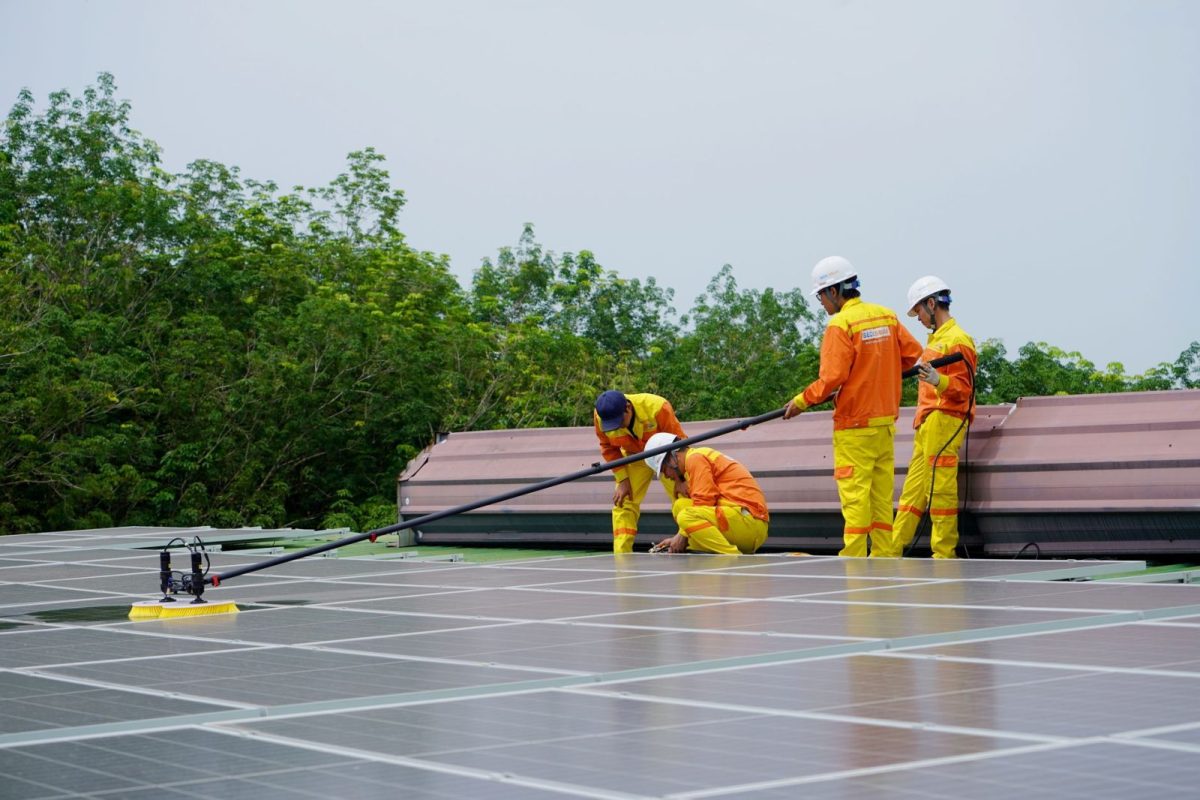
Safety warning: Solar panels and their DC wiring are live whenever there is daylight, and you cannot switch that off at the panel. Never touch damaged cables or exposed connectors, never spray water into junction boxes or the inverter, and never walk on the modules. If your roof is steep, high, or wet, hire a professional. No amount of cleaning is worth a fall or a shock.
Common Mistakes That Damage Panels
Over a stretch of service calls, the same avoidable mistakes keep coming up. Pressure washing tops the list, the jet can force water past the edge seal and void your warranty. Cleaning at midday is next, because cold water on hot glass causes micro-cracks and rapid evaporation leaves stubborn mineral rings.
The third is standing on modules to reach the far row. Panels are not walkways; your weight creates hidden cell cracks that quietly reduce output for years. Use a longer pole or a roof ladder instead. Getting these three right prevents almost every cleaning-related failure I encounter.
When Cleaning Is Not the Real Problem
Sometimes people clean spotless panels and still see weak output. That is your signal to look deeper. Partial shading from a new tree, water tank, or neighbour's structure will drag down a whole string. Loose connectors, a failing MPPT, or a nuisance grid trip can mimic soiling in the numbers.
If a clean does not restore your generation, work through the electrical side methodically. Our complete guide to solar troubleshooting walks through diagnosing output loss step by step, and if your inverter keeps disconnecting, the causes behind solar grid-fault trips in India are a good next read. Keeping the array on a routine also helps, which is exactly what an annual solar maintenance checklist is built for.
For context on how much soiling matters at the system level, India's Ministry of New and Renewable Energy and independent research from the US National Renewable Energy Laboratory both treat soiling loss as a real, measurable factor in PV performance modelling.
Frequently Asked Questions
Can I use tap water to clean solar panels?
You can, but hard tap water leaves white mineral spots as it dries, which reduces output and looks worse than the dust you removed. If your area has hard water, use collected rainwater or RO reject water, and always squeegee the glass dry to prevent spotting.
Do I really need to clean panels, or will rain do it?
Rain rinses off light dust but rarely removes bird droppings, pollen, or sticky pollution film. In dry or dusty regions rain is too infrequent to keep panels clean. Check your generation data after a few dry weeks, and if it has dropped noticeably, a manual clean is worth it.
Is it safe to clean solar panels myself?
Cleaning from ground level with an extendable pole is safe for most people. Climbing onto a steep, high, or wet roof is not. The DC wiring stays live in daylight, so never touch damaged cables or spray water into electrical boxes. When in doubt, hire a professional.
What time of day is best for solar panel washing?
Early morning or late evening, when the panels are cool and the sun is low. Cleaning hot glass at midday risks thermal stress and leaves rapid-drying mineral spots. Cooler conditions also make the work safer and more comfortable on the roof.
Can I use soap or detergent on my panels?
No. Detergents and dish soap leave a residue film that attracts dust and can degrade the module's edge sealant over time. Plain water and a soft brush remove almost everything. For stubborn droppings, soak with water and lift gently rather than reaching for chemicals.
The Bottom Line
Clean panels are the cheapest performance upgrade you own. Use plain water and a soft touch, work when the glass is cool, respect the live DC side, and let your monitoring data tell you when it is actually needed. Do that and you protect both today's units and the module's long-term health. If a clean does not bring your output back, that is your cue to dig into the electrics with our complete solar troubleshooting guide, and you can always learn more about how we test and write on our about page.