

Key Takeaways
- Solar panels make electricity through the photovoltaic effect: sunlight knocks electrons loose inside silicon cells, and the cell's built-in electric field pushes them into a usable current.
- Panels produce DC power; your inverter converts it to the AC that runs your home and feeds the grid.
- A panel's rating (say 550 W) is measured under lab conditions, so real-world output on an Indian rooftop is usually lower, especially in heat.
- Shade, dust, heat, and panel angle all cut output, which is why placement and cleaning matter more than most buyers expect.
- No moving parts means panels are low-maintenance and typically carry 25-year performance warranties.
If you have ever stood on a rooftop in Pune or Jaipur and wondered how a flat blue sheet of glass turns sunshine into the power that runs your ceiling fan, you are asking the right question. Understanding how solar panels work is not just trivia. It helps you spot a good quote from a bad one, judge whether a shady corner of your roof is worth using, and know why your system underperforms on a scorching afternoon. In this plain-English guide I will walk you through the photovoltaic effect, what happens inside a single cell, and why real rooftop output differs from the number on the datasheet.
The photovoltaic effect explained
The whole thing comes down to one physical phenomenon called the photovoltaic effect. "Photo" means light and "voltaic" means voltage, so the name literally describes turning light into electrical voltage. When sunlight hits certain materials, it hands its energy to electrons and sets them free to move.
Sunlight travels in tiny packets of energy called photons. When a photon strikes a solar cell, it can knock an electron loose from its atom. On its own, that freed electron would just wander back and settle down again. The clever part of a solar cell is that it forces those electrons to flow in one direction, and directed electron flow is exactly what we call electric current.
Solar cell basics: what is inside a panel
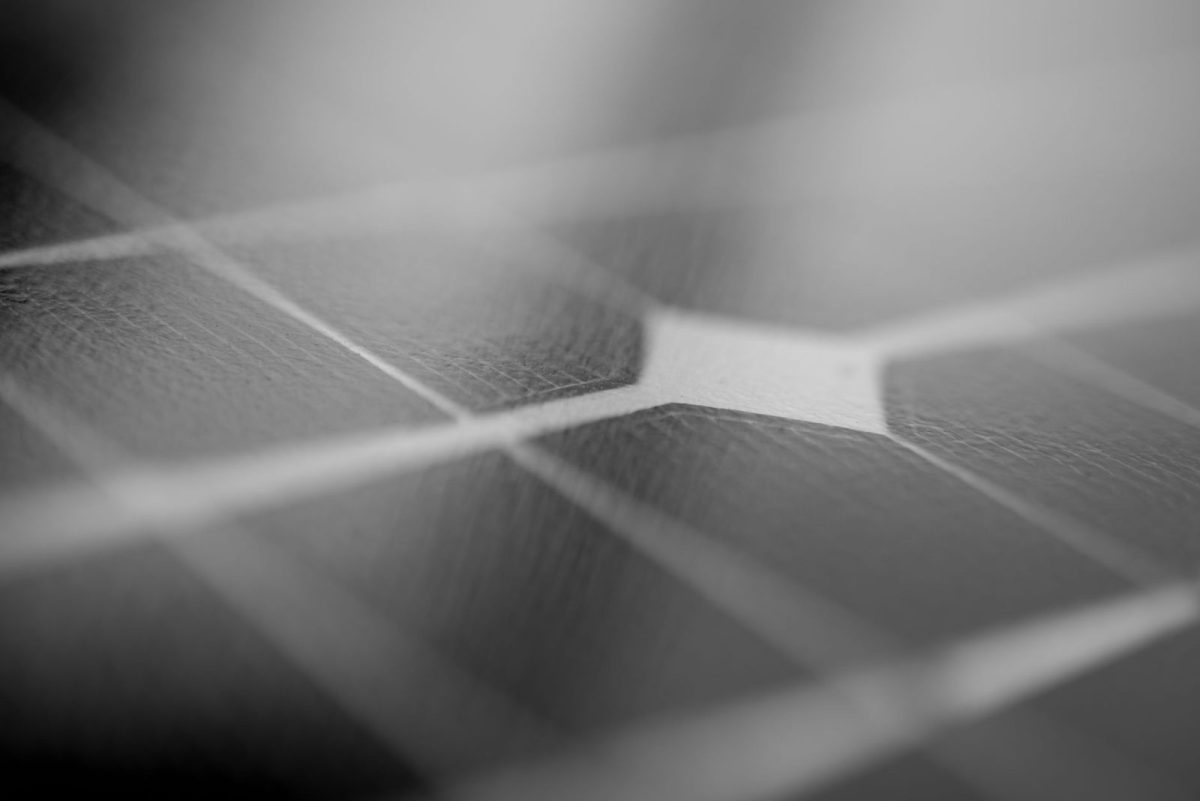
A solar panel is just many solar cells wired together and sealed under glass. Each cell is a thin wafer of silicon, the same element found in beach sand. On its own, pure silicon is a poor conductor, so manufacturers deliberately add tiny amounts of other elements in a process called doping.
One layer is doped to have extra electrons (the n-type layer) and the other is doped to have fewer (the p-type layer). Where these two layers meet, they form a junction with a built-in electric field. This field is the invisible engine of the cell: when a photon frees an electron, the field pushes it toward the thin metal lines you can see on the cell's surface.
Those metal lines collect the electrons and route them out through the wires, off to your inverter, and back into the panel to complete the loop. As long as the sun shines, this loop keeps running. There are no moving parts, no fuel, and no noise, which is why a well-installed panel can run for 25 years with little more than an occasional wash.
From DC to AC: how the panel talks to your home
Here is a detail that trips up a lot of first-time buyers. The current a solar cell produces is direct current, or DC, where electrons flow steadily in one direction. But almost everything in your home, from the fridge to the mixer grinder, runs on alternating current, or AC, supplied by the grid.
That is the inverter's job. It sits between your panels and your house, converting DC into clean 230 V AC. In a grid-tied system it also syncs with the grid so that surplus power can flow back through your net meter. When people talk about the "brain" of a solar setup, they usually mean the inverter, not the panels.
Tip: When you compare quotes, do not obsess only over panel brand. The inverter's quality and warranty affect your day-to-day generation just as much, since a poorly matched inverter can clip or waste the DC power your panels work hard to make.
PV panel working in the real world versus the datasheet
When I commissioned my first few rooftop systems, the question homeowners always asked was some version of "the box says 550 watts, so why is my app showing 430?" The honest answer is that the rated wattage is measured in a lab under Standard Test Conditions: 1000 watts of light per square metre, a cool cell temperature of 25 degrees C, and a fixed spectrum.
Your rooftop in May is nothing like that lab. Over a few installs I noticed the same pattern every summer: panels get hot, and silicon loses a little output for every degree above 25 C. Add some dust, a slightly off-ideal tilt, and a bit of wiring loss, and real output settling below the sticker number is completely normal, not a defect.
| Factor | Effect on output | What you can do |
|---|---|---|
| Heat (above 25 C) | Reduces voltage and output | Leave an air gap under panels for cooling |
| Dust and bird droppings | Blocks light, can cause hot spots | Rinse every few weeks in dry season |
| Shade (even partial) | Can drag down a whole string | Avoid shaded spots; consider optimisers |
| Tilt and orientation | Off-angle loses direct sun | Face roughly south, tilt near your latitude |
| Wiring and inverter losses | A few percent lost as heat | Use correctly sized cable and a matched inverter |
Shade deserves a special mention. Because cells in a panel are usually wired in series, shading even one cell can throttle the current through its neighbours, a bit like one kinked section choking a whole hosepipe. That is why a single overhead water tank or a neighbour's parapet can cost you far more than its shadow's size suggests. If you want to dig deeper into panel choices for these conditions, see our guide to the best solar panel types for Indian rooftops.
Safety warning: Solar panels generate live DC voltage the instant they see light, and that voltage does not switch off like a wall socket. Never poke at DC wiring, connectors, or a rooftop array yourself. Always use a licensed installer for mounting, wiring, and any work near your mains, and follow MNRE-approved practices.
Why understanding this helps you as a buyer
Once you grasp the basics, a lot of marketing noise falls away. You stop chasing the highest sticker wattage and start asking better questions: Is my roof shade-free from about 9 am to 4 pm? Is the tilt sensible? Is the inverter properly sized to the panels? These are the levers that actually move your monthly units.
It also inoculates you against the tall tales that circulate in WhatsApp groups. Panels do not need blazing heat to work; they need light, and they actually run more efficiently when cool. If you have heard claims that sound too good or too grim, our piece on solar panel myths versus facts sorts the real from the nonsense. For the full picture across sizing, cost, and installation, start with our complete guide to solar panels.
Frequently Asked Questions
Do solar panels work on cloudy days?
Yes, but at reduced output. Panels respond to light intensity, not heat, so on an overcast day they still generate power from diffuse light, often 10 to 25 percent of their peak. During heavy monsoon cloud cover, expect a noticeable dip rather than zero production.
What is the photovoltaic effect in simple terms?
It is the process where light frees electrons inside a silicon cell and the cell's built-in electric field pushes them in one direction, creating an electric current. In short, it is the physics that lets a solar panel turn sunshine directly into electricity with no moving parts.
Why is my solar output lower than the panel rating?
Panel ratings are measured in a lab at 25 degrees C with ideal light. On a hot Indian rooftop, heat, dust, tilt, shading, and small wiring losses all trim output below the sticker number. Seeing real-world figures under the rated wattage is normal and expected, not a fault.
Can I get AC directly from a solar panel?
No. Solar cells produce direct current (DC) only. To run your home appliances or feed the grid, you need an inverter to convert that DC into 230 V alternating current (AC). The inverter is a mandatory part of any usable rooftop solar system.
How long do solar panels keep working?
Most quality panels carry a 25-year performance warranty and keep producing beyond that, though output slowly declines by roughly half a percent a year. With no moving parts, the main upkeep is occasional cleaning and periodic checks of the wiring and inverter by a professional.
The bottom line
Strip away the jargon and a solar panel is beautifully simple: sunlight frees electrons in silicon, a built-in field herds them into a current, and an inverter turns that current into power your home can use. Knowing this makes you a sharper buyer, a calmer troubleshooter, and far harder to oversell. You can read more about our approach on our about page, and if you are ready to go from theory to a real system, walk through our complete guide to solar panels next. For the underlying science, the U.S. Department of Energy has a clear primer on how solar works.