

Key Takeaways
- The three main types of solar inverters are string, micro (module-level), and central inverters, each suited to a different scale of system.
- String inverters are the workhorse of Indian rooftop homes: cheapest per watt and simple to service, but one shaded panel drags down the whole string.
- Microinverters cost more upfront yet handle shading and mixed roof angles beautifully, panel by panel.
- Central inverters belong to large commercial and utility plants, not homes, so most homeowners can ignore them.
- Match the inverter category to your roof, budget, and shading before you chase brand names or fancy specs.
If you are shopping for a rooftop system, understanding the types of solar inverters is the single decision that shapes your yield, your bill, and your headaches for the next 15 years. I have commissioned enough rooftop jobs across Indian homes to tell you that most confusion comes from people comparing brands before they have picked a category. In this guide I will walk you through string, micro, and central inverters in plain language, show you where each one shines and struggles, and help you match the right type to your roof, your shading, and your budget. No jargon dumps, just what actually matters when the electrician is on your terrace.
What a Solar Inverter Actually Does
Your panels make direct current (DC). Your home, the grid, and every appliance run on alternating current (AC). The inverter is the translator that converts panel DC into usable AC, and it also decides how efficiently that conversion happens. A good inverter squeezes more out of the same panels, which is why the choice matters more than most buyers assume.
Beyond conversion, the inverter runs maximum power point tracking (MPPT), which constantly hunts for the sweet spot where your panels deliver the most power as sunlight and heat change through the day. How many MPPT channels an inverter has, and whether tracking happens per string or per panel, is exactly what separates the solar inverter categories we are about to cover.

Type 1: The String Inverter
A string inverter is one central box that a whole "string" of panels wires into, usually mounted on a wall near your meter. It is the default on the vast majority of Indian homes, and for good reason: it is the cheapest per watt, easy to service, and every local installer knows it inside out. If your roof is a clean, unshaded slab facing one direction, a string inverter is often the smartest rupee you can spend.
The catch is how a string behaves. Because panels are wired in series, the whole string can only push as much current as its weakest panel. So one panel shaded by a water tank, a parapet, or a passing monkey can quietly pull down the output of every panel on that string. Modern string inverters with two or three MPPT inputs soften this by letting you split panels into separate groups, but they cannot rescue an individual shaded module.
When I commissioned a 3 kW system on a Pune rooftop with a chimney throwing afternoon shade over two panels, the string setup lost noticeably more in the evenings than the customer expected. We fixed it by re-arranging the strings so the shaded panels sat on their own MPPT input, which recovered most of the loss without spending on new hardware. That is the kind of practical tuning a string inverter allows if the installer bothers to think it through.
Tip: If you go with a string inverter, insist on at least two MPPT inputs and ask your installer to group panels by roof face and shading. It costs nothing extra and protects your yield for years.
Type 2: The Microinverter
A microinverter is a small inverter bolted under each individual panel, so every panel does its own DC-to-AC conversion and its own MPPT. Instead of one big box, you have many tiny ones working independently. This is module-level power electronics, and it flips the string weakness on its head: a shaded or underperforming panel only affects itself, while the rest of the roof keeps producing at full tilt.
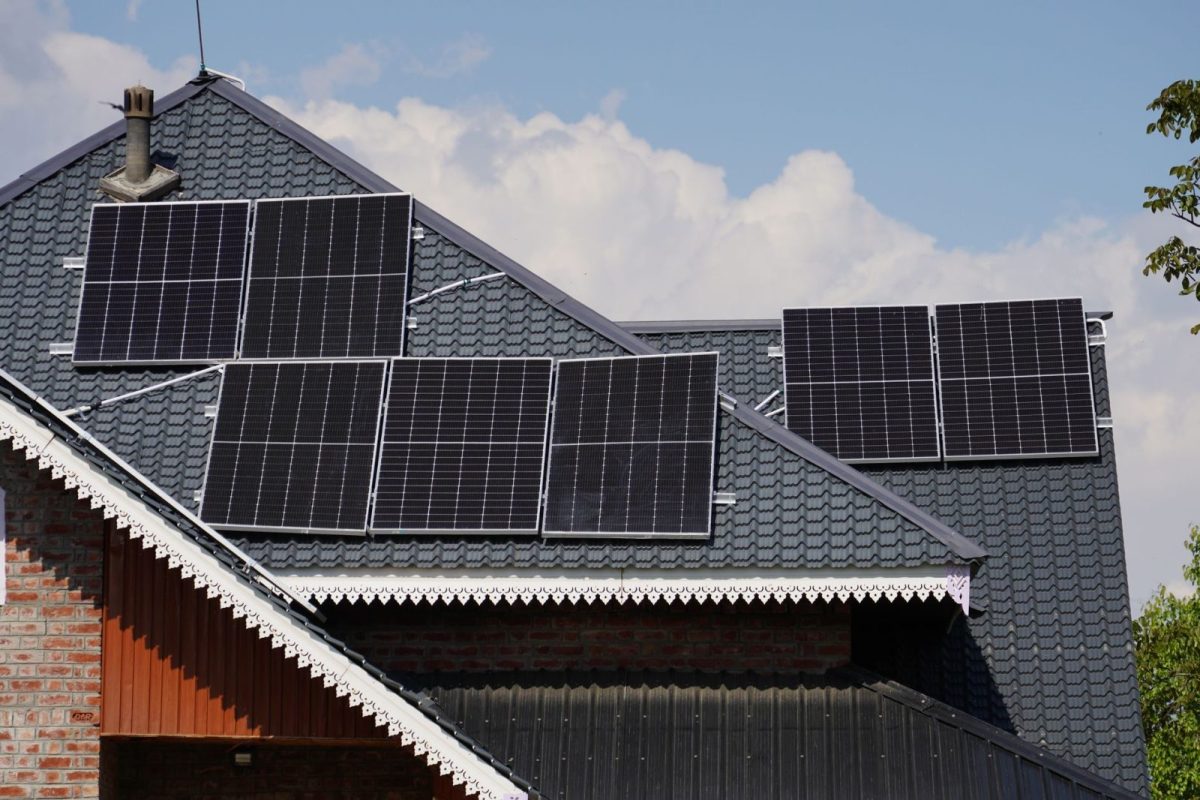
Microinverters shine on tricky Indian rooftops: multiple slopes, dormers, water tanks, and neighbours' buildings casting partial shade at different hours. They also give you true panel-level monitoring, so if one module misbehaves in year four, you know exactly which one without climbing up to test each connector. Because there is no high-voltage DC running across the roof, many installers consider them a touch safer to work around too.
The trade-offs are cost and access. Microinverters carry a meaningful premium per watt, and since the electronics sit on the roof under the panels, servicing one means going up top. For a clean, single-plane roof with no shading, that premium often is not worth it. But for a cut-up urban roof fighting shade, the extra harvest can pay the difference back over the system's life.
Type 3: The Central Inverter
A central inverter is a large, cabinet-sized unit that many strings feed into at once, rated from tens of kilowatts up to megawatts. You will find these in commercial rooftops, solar farms, and utility-scale plants, not on homes. They deliver the lowest cost per watt at huge scale and are built for centralised maintenance by trained technicians.
For a homeowner, the practical takeaway is simple: central inverters are almost never your choice. They need combiner boxes, dedicated rooms or enclosures, and professional upkeep that makes no sense for a 3 to 10 kW rooftop. I mention them so you recognise the term when a salesperson uses it, and so you can politely rule it out for a residential job. If someone pitches a "central" solution for your home, that is a red flag worth questioning.
String vs Micro vs Central: Side by Side
Here is how the three types stack up on the factors that decide a real purchase. Use it as a first filter, then dig into brands and warranties once you have picked a category.
| Factor | String Inverter | Microinverter | Central Inverter |
|---|---|---|---|
| Best for | Simple home rooftops | Shaded or multi-angle roofs | Large commercial and utility plants |
| Cost per watt | Lowest for homes | Highest | Lowest at scale |
| Shading tolerance | Weak (whole string affected) | Excellent (panel-level) | Weak |
| Monitoring | String or system level | Panel level | Plant level |
| Servicing | Easy, at wall height | On the roof, per panel | Specialist technicians |
| Typical home use | Very common | Growing on tricky roofs | Not for homes |
How to Choose the Right Type for Your Home
Over a few dozen installs I have settled on a simple decision path. It keeps buyers from overspending on features their roof will never use, and from underspending on a roof that genuinely needs help.
- Map your shade first. Stand on the roof at 9 am, noon, and 4 pm. If panels sit in clear sun all day, a string inverter is usually enough.
- Count your roof faces. One clean plane favours a string inverter. Multiple slopes or orientations lean toward microinverters or a multi-MPPT string unit.
- Set your budget honestly. If the microinverter premium blows past your comfort, a well-arranged string system is a perfectly respectable choice.
- Think about monitoring. If you want to see each panel's health remotely, microinverters give you that out of the box.
- Rule out central. For any normal home size, skip central inverters entirely.
Safety warning: Solar systems carry live DC voltage even when the grid is off, and rooftop and mains wiring can be lethal. Never open an inverter, alter DC strings, or work on your roof array yourself. Always use an MNRE-empanelled installer and a licensed electrician. See our disclaimer for more.
Whichever way you lean, remember that the inverter is only one piece. Panel quality, wiring runs, and clean net-metering paperwork with your DISCOM all shape the final result. For the full picture, see our complete guide to solar inverters, which ties these choices together. You can also read our take on the best solar inverter types for Indian homes once you have settled on a category, and if you are weighing storage, our comparison of hybrid vs string inverter options is a natural next read. For official rooftop scheme details, the Ministry of New and Renewable Energy site is the authoritative source.
Frequently Asked Questions
Which type of solar inverter is best for an Indian home?
For most Indian homes with an unshaded, single-plane roof, a string inverter offers the best value. If your roof has heavy shading or several orientations, microinverters justify their higher cost by protecting your yield panel by panel. Central inverters are not meant for homes.
Are microinverters worth the extra money?
They are worth it when shading, multiple roof angles, or a desire for panel-level monitoring are in play. On a clean, single-slope roof in full sun, the premium usually is not justified and a well-configured string inverter performs just as well for less.
Can I use a central inverter for my rooftop system?
You can, but you almost never should. Central inverters are designed for large commercial and utility plants that need centralised, specialist maintenance. For a typical 3 to 10 kW home system, a string or microinverter is simpler, cheaper to service, and far more appropriate.
Does shading really affect a string inverter that much?
Yes. Panels in a string are wired in series, so a single shaded module can drag down the whole string's output. Multiple MPPT inputs help you isolate shaded groups, but they cannot recover a single shaded panel the way a microinverter can.
How many MPPT inputs should a home string inverter have?
Aim for at least two MPPT inputs on a residential string inverter. This lets your installer group panels by roof face and shading so partial shade on one group does not penalise the others. Three inputs give even more flexibility on complex roofs.
The Bottom Line
Picking among the types of solar inverters is really about matching the technology to your roof, not chasing the fanciest box. Clean roof and tight budget? A string inverter wins. Shaded, cut-up roof? Microinverters earn their keep. Home-sized system? Skip central entirely. Get the category right and the brand decision becomes easy. When you are ready to go deeper, start with our complete guide to solar inverters and take it one confident step at a time.