

Key Takeaways
- Monocrystalline panels are the most efficient (roughly 20-23%) and the default choice for space-tight Indian rooftops, though they cost a bit more per watt.
- Polycrystalline (blue) panels are cheaper and were once everywhere, but they have largely disappeared from new residential offerings as mono prices fell.
- Thin-film panels are lightweight and shade-tolerant but need far more roof area for the same output, so they rarely suit a typical Indian home.
- For most rooftop systems in India today, mono PERC or mono TOPCon is the sensible pick; poly and thin-film are edge cases.
- Watch the warranty, temperature coefficient, and BIS certification more than the marketing label on the panel.
If you are shopping for a rooftop system, the mono vs poly vs thin-film question comes up almost immediately, usually right after price. I have commissioned enough home installs across a few Indian states to have a strong, practical opinion here, and it is not the one the brochure gives you. The honest truth is that the market has already picked a winner for most homes, but the reasons matter because they change how you size, mount, and future-proof your array. In this guide I will walk you through how the three panel technology types actually differ, what that means on a real Indian roof, and how to choose without overpaying or under-building.
The three panel technology types, in plain terms
Nearly every solar panel you can buy for a home falls into one of three families based on how the silicon (or other material) is made. Monocrystalline uses a single continuous silicon crystal. Polycrystalline melts many silicon fragments together. Thin-film skips the silicon wafer entirely and lays a very thin semiconductor layer onto glass or a flexible backing.
That manufacturing difference drives everything downstream: efficiency, price, how the panel looks, how it handles heat, and how much roof it eats. Get the family right first, then worry about brand and wattage.
Monocrystalline vs polycrystalline: the core comparison
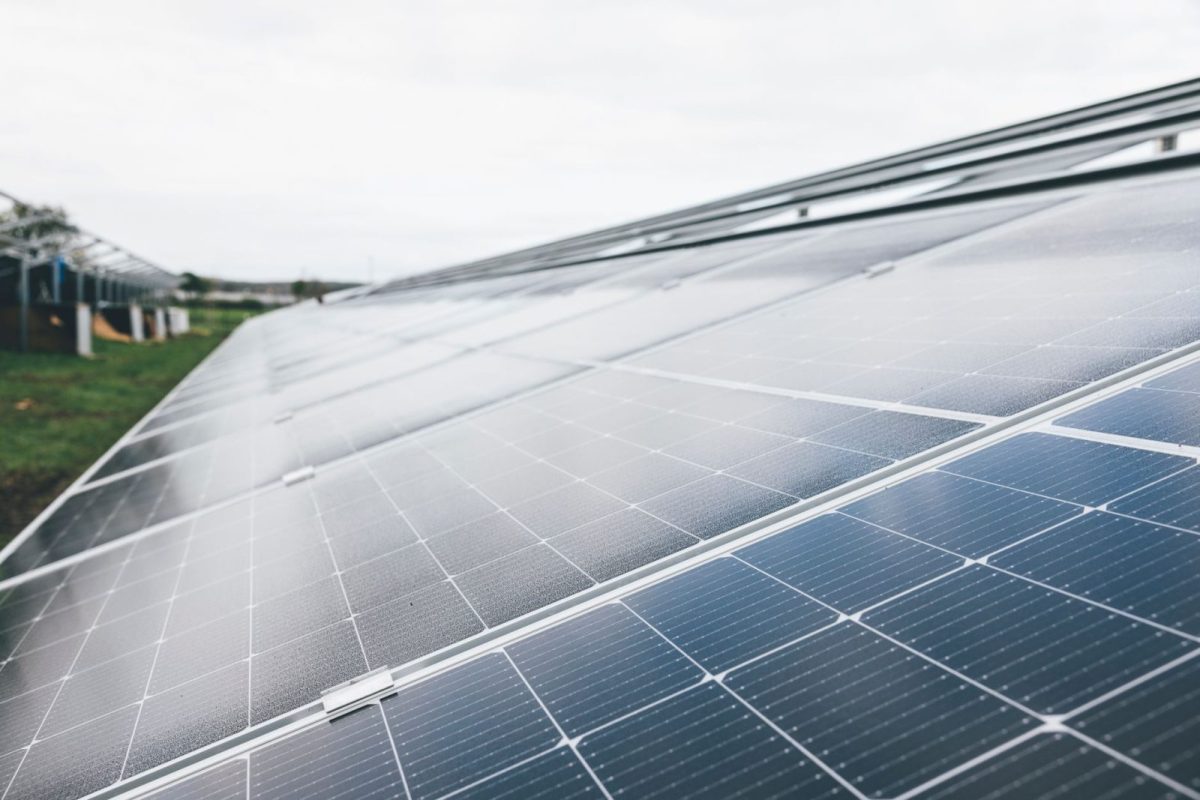
This is the comparison most homeowners actually face, because thin-film is rarely on the table for residential rooftops. Monocrystalline panels are black, uniform, and more efficient. Polycrystalline panels have that speckled blue look and were the budget default for years.
The gap used to be a real trade-off: pay more for mono efficiency, or save money with poly and give up some roof space. But here is what changed. As mono manufacturing scaled up globally, its cost per watt fell so far that the price advantage of poly nearly vanished. Today most tier-one manufacturers have simply stopped making new poly modules for homes.
So when someone offers you a very cheap poly panel now, my first question is always about its age and stock. It may be older inventory. That is not automatically bad, but you should know what you are buying.
Where thin-film panels actually fit
Thin-film panels (CdTe, CIGS, or amorphous silicon) have genuine strengths. They are light, they tolerate high heat and partial shade better than crystalline silicon, and they can be flexible. On paper that sounds ideal for hot Indian conditions.
The catch is efficiency. Thin-film typically converts only 10-13% of sunlight, so you need substantially more area for the same kilowatt output. On a compact urban rooftop where every square metre counts, that is usually a dealbreaker. Thin-film shines in large ground-mount projects, building-integrated facades, or specialty portable panels, not on the average 3 kW home system.
Tip: Before you fall for thin-film's heat-tolerance pitch, measure your usable roof area. If a mono array already fills it to hit your target kW, thin-film would simply not fit. Area, not just efficiency percentage, is the deciding number on most homes.
Side-by-side: mono vs poly vs thin-film
Here is how the three panel technology types stack up on the factors that actually affect a home system. Treat the efficiency and cost figures as typical ranges, not exact quotes; your installer's real numbers depend on the specific module and the day's market price.
| Factor | Monocrystalline | Polycrystalline | Thin-Film |
|---|---|---|---|
| Typical efficiency | 20-23% | 15-17% | 10-13% |
| Roof area per kW | Least | Moderate | Most |
| Appearance | Uniform black | Speckled blue | Dark, uniform sheet |
| Cost per watt | Low (now) | Slightly lower / older stock | Varies, often niche pricing |
| Heat tolerance | Good (esp. TOPCon) | Moderate | Best |
| Shade tolerance | Moderate | Moderate | Better |
| Best fit | Most Indian rooftops | Budget / legacy stock | Large ground-mount, BIPV |
What actually matters on an Indian roof
The label on the front of the panel matters less than three numbers on the datasheet. First, the temperature coefficient of Pmax: our rooftops get brutally hot, and a panel that loses less power per degree above 25C will quietly out-earn a slightly higher-rated panel that fades in May heat.
Second, the warranty. Look for a product warranty of 12 years or more and a performance warranty guaranteeing around 87% output at year 25. Third, certification. Insist on BIS-registered modules from the ALMM list if you want to claim the residential rooftop subsidy under India's PM Surya Ghar scheme.
When I commissioned a 5 kW system on a narrow terrace in a metro suburb, the family had been quoted poly to save a little money. We ran the numbers: the poly array would have needed extra rows the roof simply did not have, forcing a smaller system and a longer payback. Switching to mono PERC let us fit the full 5 kW in the available space at nearly the same total cost. That is the pattern I see again and again, and it is why I lead with area, not sticker price.
How to choose your panel type, step by step
- Measure your usable, unshaded roof area in square metres, and note the direction it faces.
- Decide your target system size in kW based on your monthly electricity bill and net-metering rules.
- Divide the target kW by your roof area. If space is tight, mono is almost mandatory.
- Ask installers to quote mono PERC and mono TOPCon, and get the datasheet, not just the wattage.
- Compare temperature coefficient, degradation rate, and both warranty terms across the shortlist.
- Confirm the module is BIS-certified and on the ALMM list if you plan to claim a subsidy.
- Only consider poly or thin-film if you have a specific reason, such as very cheap verified stock or a huge low-value roof.
Safety warning: Solar modules carry live DC voltage whenever there is daylight, and rooftop DC wiring can deliver a serious shock even with the grid off. Panel selection is fine to do yourself, but leave roof mounting, DC string wiring, and inverter connection to a certified installer. Never probe module connectors or work on the array in wet conditions.
Common mistakes buyers make with panel technology types
The biggest one is chasing the highest efficiency number without checking whether their roof even needs it. If you have a big, unshaded roof and a modest target, a slightly less efficient panel that costs less per watt can be perfectly rational.
The second mistake is ignoring degradation and warranty in favour of a flashy peak wattage. A panel is a 25-year purchase; year-25 output and the company's ability to honour a claim matter far more than a 1% efficiency edge. For more on the traps I see, read our guide to common solar panel buying mistakes to avoid.
So which one should you actually buy?
For the overwhelming majority of Indian homes, the answer is monocrystalline, specifically mono PERC or the newer mono TOPCon. It fits the most power into the least roof, its price is now competitive, and it is what tier-one brands are actively selling and supporting.
Choose polycrystalline only if you find genuinely cheaper, well-warrantied stock and you have roof area to spare. Choose thin-film only for unusual situations like very large ground-mounts or integrated building surfaces. To match a specific panel to your rooftop, see our roundup of the best solar panel types for Indian rooftops, and for the full picture read our complete guide to solar panels.
You can cross-check certification and subsidy rules directly at the Ministry of New and Renewable Energy, and the U.S. National Renewable Energy Laboratory maintains solid background on cell efficiencies if you want to go deeper.
Frequently Asked Questions
Is monocrystalline always better than polycrystalline?
Not always, but usually. Mono is more efficient and now similarly priced, so it wins on tight roofs. Poly can still make sense if you find cheaper, well-warrantied stock and have plenty of unshaded roof area to spare for the extra panels.
Are thin-film panels good for Indian homes?
Rarely. Thin-film tolerates heat and shade well, but its low efficiency means it needs far more roof area for the same output. On a compact urban rooftop that usually does not fit. It suits large ground-mounts and building-integrated surfaces more than typical homes.
How can I tell mono from poly panels by looking?
Colour is the quick tell. Monocrystalline cells are a uniform deep black with rounded cell corners, while polycrystalline cells look speckled or marbled blue with square corners. Thin-film modules appear as a smooth, dark, uniform sheet with no visible individual cells.
Does panel type affect my rooftop subsidy in India?
The type itself does not, but certification does. To claim the PM Surya Ghar residential subsidy, your modules must be BIS-registered and on the government ALMM list. Most such approved modules today are monocrystalline, so in practice mono is the common subsidy-eligible choice.
Which panel type lasts longest?
All three can last 25 years or more; what matters is the degradation rate and warranty, not the family. Quality monocrystalline modules typically degrade slowest and carry the strongest performance warranties today, but always compare the specific datasheet rather than assuming based on the label alone.
Conclusion
The mono vs poly vs thin-film debate has a clear practical answer for most Indian rooftops: monocrystalline, because it packs the most power into the least space at a price that is now hard to beat. Poly and thin-film still have their niches, but they are the exception, not the rule. Measure your roof, read the datasheet, and check certification before you sign anything. If you want to go deeper into sizing and system design, start with our complete guide to solar panels, and feel free to review how we work on our about page.