

Key Takeaways
- The inverter is the brain of your solar system: it turns the DC your panels make into the AC your home and the grid use, and it decides how much of your generation you actually capture.
- Four families cover almost every home install: string inverters, microinverters, hybrid (battery-ready) inverters, and off-grid inverters. Each suits a different roof, budget, and backup goal.
- Size the inverter to your array and load, not just to a round number. Getting the DC:AC ratio and MPPT windows right matters more than chasing the highest peak wattage.
- In India, look for BIS/IEC compliance, a genuine service network, and a warranty you can actually claim. A cheap inverter with no local support is the most expensive mistake you can make.
- Efficiency numbers (CEC vs Euro) tell part of the story; real-world yield depends on shading, temperature, and how well the unit is matched to your panels.
If you are buying a rooftop solar system, this solar inverter guide is the one page I wish every homeowner read before signing a quote. I have spent the last decade sizing arrays, commissioning inverters, and chasing down the odd underperforming string on a hot afternoon, and the inverter is where most systems quietly win or lose money. Panels get all the attention, but the inverter decides how much of that sunshine reaches your meter. Here you will learn how solar inverters work, the main solar inverter types and when each makes sense, and a practical framework for choosing a solar inverter that fits your roof, your budget, and Indian grid conditions.
What a solar inverter actually does
Your solar panels produce direct current (DC) electricity. Your home appliances, your utility meter, and the grid all run on alternating current (AC). The inverter's core job is that DC-to-AC conversion, thousands of times a second, cleanly enough that a fridge or a ceiling fan cannot tell the difference from grid power.
But conversion is only half the story. A modern inverter also runs Maximum Power Point Tracking (MPPT), which constantly hunts for the voltage-current sweet spot where your panels give the most power as sun and temperature change. It monitors output, protects against faults, and on grid-tied systems it synchronises perfectly with the utility so you can export surplus under net metering.
If you want the full walk-through of the conversion process, we cover it in detail in How a Solar Inverter Works, Explained Simply. For this guide, the key point is this: the inverter is not a passive box. It is an active manager that determines your daily harvest.
Solar inverter types: string, micro, hybrid, and off-grid
Most residential choices come down to four families. Understanding solar inverter types is the single most useful thing you can do before comparing brands, because the right architecture depends on your roof shape, shading, and whether you want batteries.
String inverters
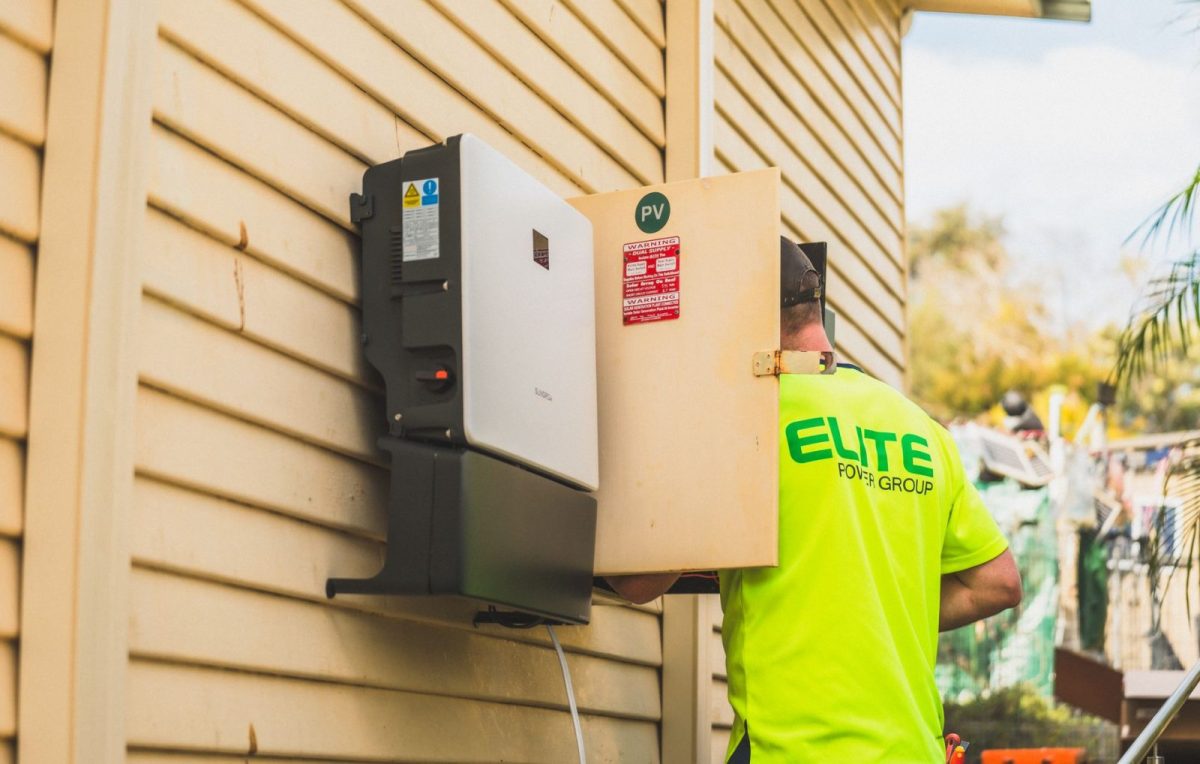
A string inverter connects a series ("string") of panels to one central unit, usually mounted on a wall near your meter. It is the workhorse of Indian residential solar: cost-effective, mature, and easy to service. The trade-off is that panels in a string share a current, so heavy shading on one panel drags the whole string down.
Microinverters
Microinverters sit under each panel and convert DC to AC right there. Because every panel operates independently, shade or a weak module on one does not hurt the rest. They shine on complex roofs with multiple orientations or partial shading, but they cost more per watt and put more electronics on the roof. See String vs Microinverters: Which to Choose for a head-to-head.
Hybrid inverters
A hybrid inverter manages panels, a battery, the grid, and your loads in one unit. It is the practical choice if you want backup during outages or plan to add storage later. In many Indian homes with frequent load-shedding, a hybrid inverter pays for itself in comfort alone. Compare the trade-offs in Hybrid vs String Inverter: Which Fits You.
Off-grid inverters
Off-grid inverters run a home entirely from panels and batteries with no utility connection, common for farms, remote sites, and homes with unreliable supply. They must be sized carefully around your battery bank and daily load, because there is no grid to lean on when the sun is weak.
For a fuller taxonomy including large central inverters, read Types of Solar Inverters: String, Micro, Central.
| Type | Best for | Shade tolerance | Relative cost | Battery-ready |
|---|---|---|---|---|
| String | Simple, unshaded roofs | Low | Lowest | Add-on / AC couple |
| Microinverter | Complex, partly shaded roofs | High | Higher | AC couple |
| Hybrid | Homes wanting backup/storage | Low-medium | Medium-high | Yes, native |
| Off-grid | No/unreliable grid | Depends on design | Varies | Yes, required |

How to size and match your inverter
Sizing is where I see the most avoidable mistakes. The inverter's AC rating should be matched to your array's DC capacity and to how much power you actually draw, not simply rounded up to the next available model.
A worked example: a home with a 5 kW panel array does not automatically need a 5 kW inverter. Because a rooftop array rarely hits its full rated output (panels degrade slightly, run hot, and are rated under lab conditions), installers often pair it with a slightly smaller inverter, say 4 to 4.5 kW. That deliberate mismatch is the DC:AC ratio.
A modest amount of oversizing on the DC side lets the inverter run in its efficient band for more of the day and captures more energy in real Indian conditions. Push it too far and you "clip" peak-sun output. We explain the balance in DC:AC Ratio and Inverter Oversizing Explained, and the full method in How to Size a Solar Inverter to Your Array.
Tip: Before you accept a quote, ask the installer for the panel Voc (open-circuit voltage) at your lowest expected temperature and confirm the string stays inside the inverter's MPPT and maximum input voltage window. A string that swings out of the window on a cold morning either underperforms or trips.
Reading efficiency and datasheet numbers honestly
Every datasheet quotes an efficiency figure, and buyers often fixate on it. In practice, the difference between a 97% and a 98% inverter is small compared to losses from shading, poor ventilation, or a badly matched string. Still, it is worth knowing what the numbers mean.
You will see two headline ratings: peak efficiency (the best-case single point) and weighted efficiency (CEC in the US, Euro in Europe), which averages performance across a realistic spread of loads. The weighted number is the honest one to compare. We break down the difference in Inverter Efficiency and CEC vs Euro Ratings, and give you a full spec walk-through in Solar Inverter Datasheet Checklist for Buyers.
For neutral technical background on grid-connected PV performance and standards, the US National Renewable Energy Laboratory is a solid reference: NREL.
Choosing a solar inverter: a practical framework
Choosing a solar inverter comes down to matching four things: your roof, your goals, your grid reality, and your after-sales support. Here is the order I actually use on site.
- Assess the roof. One clean, unshaded plane facing roughly south? A string inverter is usually the most cost-effective. Multiple orientations, dormers, or partial shade? Lean toward microinverters or module-level optimisers.
- Decide on backup. If outages matter or you want batteries now or later, pick a hybrid inverter from the start. Retrofitting storage onto a pure grid-tie string inverter costs more.
- Confirm grid and net metering. Check your DISCOM's net-metering rules and that the model is on the approved list. A grid-tie inverter must safely disconnect during an outage (anti-islanding) to protect line workers.
- Match the electricals. Verify MPPT count, voltage window, and DC:AC ratio against your exact panels, not a generic template.
- Vet warranty and service. A genuine local service network and a claimable warranty beat a spec sheet. Confirm standard warranty length and what an extension costs.
- Compare total value, not sticker price. Factor efficiency, warranty, monitoring, and support into a per-year cost, not just the upfront rupee figure.
For India-specific model guidance, see Best Solar Inverter Types for Indian Homes, and avoid the traps in Common Solar Inverter Buying Mistakes to Avoid.
Safety warning: Solar DC circuits can carry hundreds of volts even in weak light and never fully "switch off" while the sun is up. Inverter installation involves live DC wiring, mains AC connections, and roof work. This is licensed-electrician territory, not a weekend DIY job. Always use a qualified installer and follow your DISCOM's grid-connection rules. See our disclaimer for more.
Cost, warranty, and Indian buying reality
The inverter is typically the second-largest cost in a rooftop system after the panels, and it is the component most likely to need replacement within the system's life. That makes warranty and service network more important than saving a few thousand rupees upfront.
Look for BIS and IEC compliance, MNRE-recognised equipment where a subsidy is involved, and a brand with a real presence in your city. For a current price breakdown, see Solar Inverter Cost in India (2026 Guide). For official scheme and subsidy details, the Ministry of New and Renewable Energy is the authority: MNRE.
One field observation from years of commissioning: the inverters that cause the fewest late-night service calls are rarely the cheapest, but they are almost always the ones with proper ventilation, a sane MPPT match, and a vendor who answers the phone. Cutting corners on any of those three is where regret starts.
Clearing up common myths
A few beliefs cost people money. "Bigger inverter equals more power" ignores DC:AC ratio and clipping. "Microinverters are always better" ignores cost and roof simplicity. "The inverter never needs attention" ignores dust, heat, and ageing capacitors. We debunk the rest in Solar Inverter Myths vs Facts, Debunked and answer rapid-fire questions in Solar Inverter FAQ: 15 Questions Answered.
Frequently Asked Questions
What size solar inverter do I need for my home?
Size it to your panel array and daily load, not a round number. Many installers pair a slightly smaller inverter with the array (a DC:AC ratio above one) to run efficiently for more of the day. Confirm the exact match against your panel voltages and your typical peak draw.
String inverter or microinverters, which is better?
Neither is universally better. String inverters are cheaper and ideal for a single clean, unshaded roof. Microinverters cost more but handle shading and multiple orientations far better because each panel works independently. Your roof shape and shading should decide, not the marketing.
Do I need a hybrid inverter if I want batteries?
A hybrid inverter is the cleanest way to run panels, a battery, and the grid from one unit, and it gives backup during outages. You can also AC-couple a battery to an existing grid-tie system, but if you want storage from day one, a hybrid usually costs less overall.
How long does a solar inverter last?
Most residential inverters last roughly a decade or more, shorter than the 25-year panel life, which is why it is the component you are most likely to replace once. Good ventilation, a sane load match, and dust control extend its life. Choose a brand with a claimable warranty and local service.
What efficiency rating should I look for?
Compare weighted efficiency (CEC or Euro), not just peak. Most quality modern inverters sit in the high-90s percent, and the one-point differences matter far less than shading, ventilation, and correct string matching. Treat efficiency as a tie-breaker, not the headline decision.
Conclusion
The inverter is the one component that quietly decides how much of your solar investment actually reaches your meter, so it deserves more thought than the sticker price gets. Match the type to your roof, size it to your array and loads, check the efficiency and warranty honestly, and insist on real local service. Get those right and the rest of the system tends to look after itself. If you are just starting out, bookmark this complete guide to solar inverters and work outward to the deeper topics from here, beginning with How a Solar Inverter Works. Not sure who is behind this advice? Read about Inverter HQ.