


Key Takeaways
- An inverter efficiency rating is a percentage that tells you how much DC power from your panels survives the trip to usable AC. Small differences (say 96.5% vs 98%) add up over years of generation.
- CEC and Euro efficiency are both "weighted" ratings that blend performance at different load levels, but they weight those levels differently. Euro assumes cloudier conditions; CEC assumes sunnier ones closer to Indian reality.
- Peak efficiency (the biggest number on the datasheet) is marketing. Weighted CEC or Euro efficiency is what you should actually compare.
- MPPT efficiency and clipping losses are separate from conversion efficiency, and an oversized array can quietly cap your output on sunny afternoons.
- For most Indian rooftops, a CEC efficiency at or above 97.5% is a solid target; chasing the last 0.5% rarely pays for itself.
When I first started commissioning rooftop systems, homeowners would ask me why two inverters with nearly identical price tags had such different numbers on the box. The answer almost always came down to how the inverter efficiency rating was measured. That single percentage decides how much of your hard-earned solar generation actually reaches your fan, fridge and inverter AC, versus vanishing as heat inside the box on the wall. In this guide I will explain what the rating really means, how CEC and Euro efficiency differ, why peak numbers mislead, and how MPPT efficiency and clipping quietly eat into real-world yield.
What an inverter efficiency rating actually measures
Your panels produce direct current (DC). Your home and the grid run on alternating current (AC). The inverter converts one into the other, and no conversion is perfect. Efficiency is simply AC power out divided by DC power in, expressed as a percentage.
So a 97% efficient inverter fed 5,000 watts of DC delivers roughly 4,850 watts of AC. The missing 150 watts becomes heat, which is why inverters have fins and fans. Over a full year on a 5 kW system, that few-percent gap can mean a meaningful chunk of units either earned or lost.
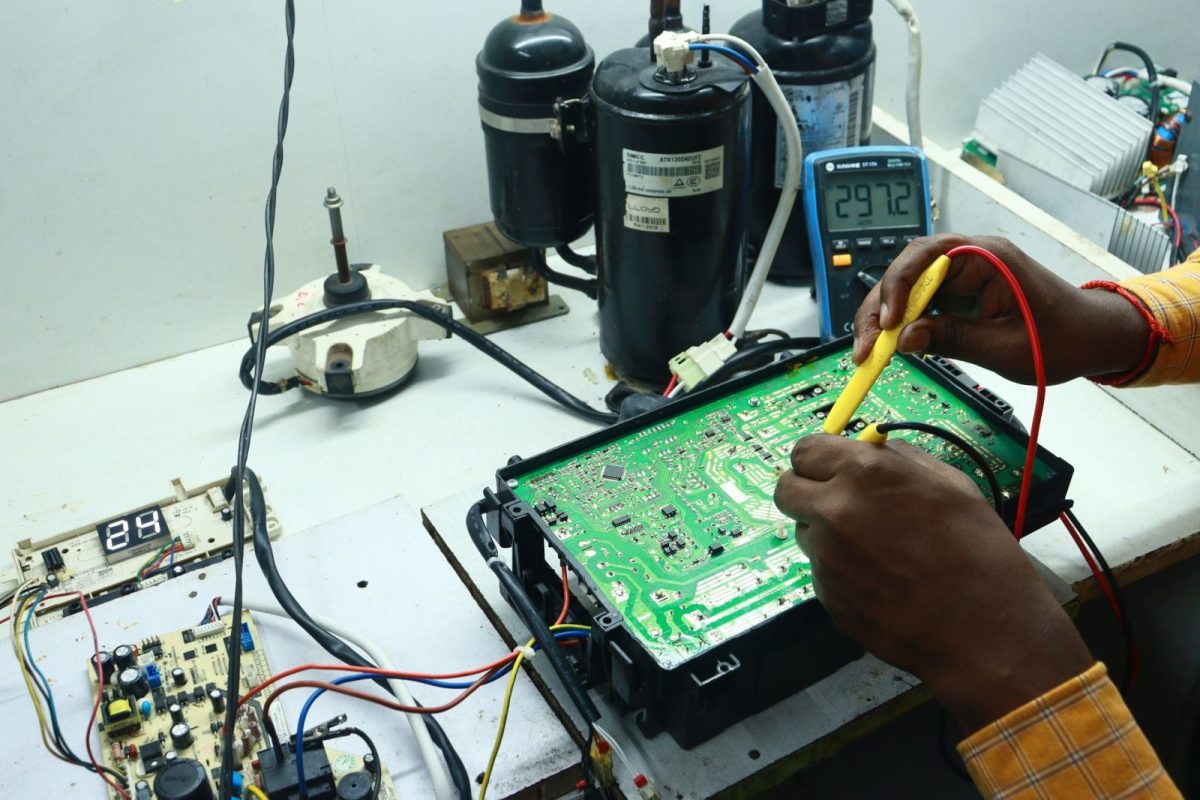
Here is the catch that trips up most buyers: efficiency is not a single fixed value. It changes with how heavily the inverter is loaded and with the DC voltage coming in. An inverter might hit its best efficiency at 40% load and drop off at both very low and very high loads. That is exactly why a single "peak" figure is close to useless for comparison, and why weighted ratings exist.
Peak efficiency vs weighted efficiency
Peak (or maximum) efficiency is the single best value the inverter can achieve under ideal lab conditions, usually at one specific load point. It is the big number splashed across the brochure. But your inverter almost never lives at that exact point.
Across a real day, load swings from a trickle at sunrise to near-full at noon and back down by evening. Weighted efficiency ratings solve this by testing the inverter at several load levels (typically 5%, 10%, 20%, 30%, 50%, 75% and 100%) and blending the results using fixed weights. The two weighting recipes you will see on datasheets are Euro efficiency and CEC efficiency.
Tip: When two inverters are on your shortlist, ignore the peak number entirely. Line up their CEC or Euro figures instead. If a datasheet only quotes peak efficiency and no weighted value, treat that as a small red flag about the manufacturer's transparency.
CEC efficiency vs Euro efficiency: the real difference
Both are weighted averages, but they assume different climates. Euro efficiency (the European standard) weights the lower load points more heavily because it assumes a cloudier, hazier climate where the inverter spends more time part-loaded. CEC efficiency (the California Energy Commission standard) weights the higher load points more because it assumes a sunnier climate where the inverter runs closer to full more often.
The practical upshot for India is simple. Most of the subcontinent sees strong, sustained sun, so our operating pattern sits closer to the California assumption than the German one. That makes CEC efficiency the slightly more honest predictor of real yield for a typical Indian rooftop, though the gap between the two numbers is usually small.
| Rating | Weights favour | Assumed climate | Best for judging |
|---|---|---|---|
| Peak efficiency | One ideal load point | Lab conditions | Marketing only |
| Euro efficiency | Lower / part loads | Cloudier, Northern Europe | Hazy, overcast sites |
| CEC efficiency | Higher / full loads | Sunny, California-like | Most Indian rooftops |
A quick example from the datasheets I keep on hand: it is common to see an inverter quote something like 98.4% peak, 98.0% Euro and 97.8% CEC. Notice how the weighted numbers land below the peak, and how CEC sits just under Euro because the sunnier weighting is harder to satisfy. When you compare brands, compare like with like: Euro against Euro, or CEC against CEC. Never pit one brand's peak against another's weighted figure.
MPPT efficiency and clipping: the losses the datasheet hides
Conversion efficiency is only half the story. Before the inverter converts anything, its Maximum Power Point Tracker (MPPT) has to find the exact voltage where your panels produce the most power. MPPT efficiency is how well and how fast it tracks that moving target as sun and temperature shift through the day.

Good MPPT algorithms are typically 99% or better and rarely the weak link. The bigger real-world thief is clipping. If you install more panel wattage than the inverter's AC rating (a common and often sensible practice called DC oversizing), then on the brightest afternoons the array wants to push out more than the inverter can pass. The inverter simply caps the output and the extra is lost.
Over a few installs I noticed that modest oversizing, roughly 10 to 20% more DC than AC, actually raises total annual yield because it lifts output in the mornings, evenings and cloudy spells far more than it loses to a handful of clipped noon peaks. Push the ratio too far, though, and you start throwing away good sunlight. It is a balance, not a free lunch.
Safety warning: Inverter efficiency and DC oversizing decisions affect string voltages and currents on your roof. Getting them wrong can push DC voltage past the inverter's maximum input and create a fire or shock hazard. Never resize strings, rewire DC connectors or open a live inverter yourself. Have a qualified, MNRE-empanelled installer verify every string calculation. See our disclaimer before acting on any figures here.
How to compare inverters on efficiency: a simple process
Here is the exact sequence I walk homeowners through when efficiency is on the table.
- Find the weighted figure. On each datasheet, locate the CEC efficiency (preferred for India) or Euro efficiency. Ignore the peak number.
- Compare like with like. Only compare CEC to CEC or Euro to Euro across brands.
- Check the MPPT efficiency line. It should read 99% or higher; if it is missing, ask the vendor.
- Confirm the DC/AC ratio your installer proposes. Anywhere from about 1.1 to 1.3 is usually reasonable for Indian sun; question anything much higher.
- Weigh efficiency against warranty and service. A half-percent efficiency edge means little if support is poor. Reliability protects yield too.
If you are still choosing between architectures, our comparison of string vs microinverters covers how efficiency, shading and per-panel tracking interact, since microinverters and string inverters report efficiency a little differently.
Does a higher efficiency rating justify a higher price?
Sometimes, but the maths is less dramatic than sales pitches suggest. Moving from 96.5% to 98% weighted efficiency recovers around 1.5% more generation. On a typical residential system that is real money over a decade, but it rarely justifies a large premium on its own.
Efficiency matters most when it comes bundled with better thermal design, longer warranty and reliable local service, because those keep the inverter running near its rated efficiency for years instead of degrading. For a full breakdown of how these trade-offs hit your budget, see our guide on solar inverter cost in India, and for the bigger picture read our complete guide to solar inverters.
For standardised, independent test methods behind these numbers, the US National Renewable Energy Laboratory publishes solid background on inverter performance and testing, and Indian scheme requirements are set out at the Ministry of New and Renewable Energy.
Frequently Asked Questions
What is a good inverter efficiency rating for a home solar system?
For Indian rooftops, aim for a CEC efficiency of 97.5% or higher, or a Euro efficiency around 98%. Above that, gains are small. Prioritise a strong weighted rating combined with good warranty and service over chasing the absolute highest number.
What is the difference between CEC and Euro efficiency?
Both are weighted averages of efficiency across load levels. Euro weighting favours part-load performance for cloudier European climates. CEC weighting favours higher loads for sunnier conditions, making it a slightly better predictor of real yield on most Indian rooftops.
Is peak efficiency the number I should compare?
No. Peak efficiency is a single best-case value measured at one ideal load point and is mainly a marketing figure. Always compare the weighted CEC or Euro efficiency instead, and make sure you compare the same type of rating across different brands.
What is inverter clipping and should I worry about it?
Clipping happens when your panels briefly produce more power than the inverter can pass, so the extra is capped and lost. Modest DC oversizing of 10 to 20% usually raises annual yield despite minor clipping. Excessive oversizing wastes sunlight, so keep the ratio reasonable.
Does MPPT efficiency matter as much as conversion efficiency?
MPPT efficiency is important but rarely the weak link, since good trackers hit 99% or better. Conversion efficiency and clipping losses usually have a larger effect on total yield. Still, check the MPPT figure is listed; a missing value can signal a lower-quality inverter.
The bottom line on inverter efficiency
Efficiency ratings reward a little attention and punish blind trust in the biggest number on the box. Compare weighted CEC or Euro figures, favour CEC for Indian sun, keep MPPT and clipping in mind, and let warranty and service break any tie. Do that and you will pick an inverter that quietly delivers year after year. When you are ready to go deeper on sizing, cost and inverter types, start with our complete guide to solar inverters.