


Key Takeaways
- The biggest panel buying mistakes are chasing the lowest price per watt and ignoring the warranty fine print, not picking the wrong cell technology.
- Match panel size and count to your roof area and inverter window first, then compare brands, so you do not buy modules that never fit or perform.
- Insist on a real datasheet, an IEC certification number, and a written performance warranty before you pay any advance.
- Under Indian heat, a panel's temperature coefficient and honest degradation curve matter more than the shiny STC wattage on the label.
- Buy from an installer who will still answer the phone in year five, because a panel is a 25-year relationship, not a one-time purchase.
Avoiding common solar panel buying mistakes is the difference between a rooftop that quietly pays you back for 25 years and one that becomes a source of regret by the second monsoon. I am Arjun Mehta, and over years of commissioning rooftop systems across India I have seen the same handful of panel purchase errors repeat in home after home. The good news is that almost every one of them is easy to dodge once you know where installers and salespeople cut corners. In this guide you will learn the specific traps, why they cost you real money, and the exact questions to ask before you sign anything.
Mistake 1: Chasing the lowest price per watt
The cheapest quote almost always wins the WhatsApp comparison, and that is exactly the trap. A panel that is 3 to 4 rupees per watt cheaper often gets there by using lower-grade cells, a thinner backsheet, or a brand with no service presence in India. Over 25 years that saving disappears the first time a module fails and nobody honours the warranty.
Price per watt is a useful sanity check, not a decision. When I compare two quotes I ask what the total energy over the panel's life will be, not just the sticker cost today. A slightly pricier panel with a better degradation curve usually generates more units over its lifetime, which is the number that actually pays your bill.
Mistake 2: Ignoring the warranty fine print
Every brochure shouts "25 year warranty," but there are actually two warranties on a panel and buyers routinely confuse them. The product warranty covers manufacturing defects and is often only 10 to 12 years. The performance warranty guarantees the panel still produces a stated percentage of its rated output after 25 years, typically around 84 to 87 percent.
The wrong panels are the ones where you never read either document. Ask for the warranty PDF before you buy, and check who honours it: the manufacturer, the distributor, or nobody reachable. A warranty from a company with no Indian office is a piece of paper, not a promise.
Tip: Ask the installer to email you the actual panel datasheet and both warranty documents before you pay any advance. If they hesitate or send a generic PDF with no model number, treat it as a red flag and walk away.
Mistake 3: Buying wattage without reading the datasheet
A panel labelled 550W looks better than one labelled 540W, so buyers stop reading there. That STC wattage is measured at 25 degrees Celsius in a lab, which is nothing like an Indian rooftop that routinely hits 60 to 70 degrees. The number that predicts real-world output is the temperature coefficient of Pmax, usually around minus 0.34 to minus 0.29 percent per degree.
A lower (closer to zero) temperature coefficient means the panel loses less power as it heats up, which in our climate can be worth more than a few extra rated watts. The datasheet also lists the module efficiency, which tells you how much power you get per square metre, and that decides whether your roof can even fit the capacity you want.
Mistake 4: Not matching panels to your roof and inverter
This is the panel shopping tip most homeowners never hear. Panels are not bought in isolation; they must fit your available shade-free roof area and sit inside your inverter's voltage and current window. I have seen buyers order high-voltage panels that pushed a string past the inverter's MPPT limit, or so many modules that half the array ended up under a water tank's shadow.
Before you finalise a model, work out how many panels fit your usable roof, then confirm the string configuration keeps the inverter happy at both cold-morning high voltage and hot-afternoon low voltage. If your installer cannot show you this on paper, they are guessing, and guesses are one of the most expensive solar panel purchase errors you can make. Our guide to the best solar panel types for Indian rooftops walks through which formats suit tight or shaded roofs.
Mistake 5: Falling for STC numbers over real degradation
Panels do not stay at their rated output; they fade a little every year. A typical module loses around 1 to 2 percent in the first year, then roughly 0.5 percent annually after that. Cheaper panels often degrade faster, and that gap compounds silently across two decades.
When I commissioned my own reference array and tracked its output, the difference between a good degradation curve and a poor one was clearly visible on the meter within a few years, not decades. That real-world experience is why I never judge a panel on its year-one wattage alone. You can see how I measured this in my write-up on tracking panel degradation over three years.
Mistake 6: Skipping certifications and traceability
For any grid-connected or subsidy-eligible system in India, the panel should carry the right IEC certifications (IEC 61215 for design qualification and IEC 61730 for safety) and, for MNRE subsidy, appear on the approved models list. Buyers who skip this often discover at inspection that their panels do not qualify for net metering or the residential subsidy.
Ask for the certification numbers and the ALMM or approved-list reference, then verify them. You can cross-check scheme requirements directly on the Ministry of New and Renewable Energy site. It takes ten minutes and can save you from an entire installation that the DISCOM refuses to approve.
Mistake 7: Trusting the salesperson over the paperwork
The most human mistake is buying a person instead of a product. A confident salesperson quotes a brand, promises the moon, and the actual model delivered is a cheaper cousin. Because most buyers never wrote down the exact model number, they have no way to prove the swap happened.
Get the exact make, model, and wattage in writing on the quotation, and check the physical labels on delivery match it. On more than one commissioning I have caught a substitution simply by reading the serial-number sticker against the invoice before the panels went up.
Quick comparison: smart choice vs common mistake
| Decision point | Common mistake | Smarter approach |
|---|---|---|
| Price | Pick the lowest rupees per watt | Compare lifetime energy and cost together |
| Warranty | Assume "25 years" covers everything | Read product and performance warranties separately |
| Rating | Judge by STC wattage on the label | Check temperature coefficient and efficiency |
| Fit | Order panels, worry about roof later | Size to roof area and inverter window first |
| Compliance | Trust the brochure | Verify IEC certs and MNRE approved list |
| Seller | Believe the sales pitch | Get model and serials in writing |
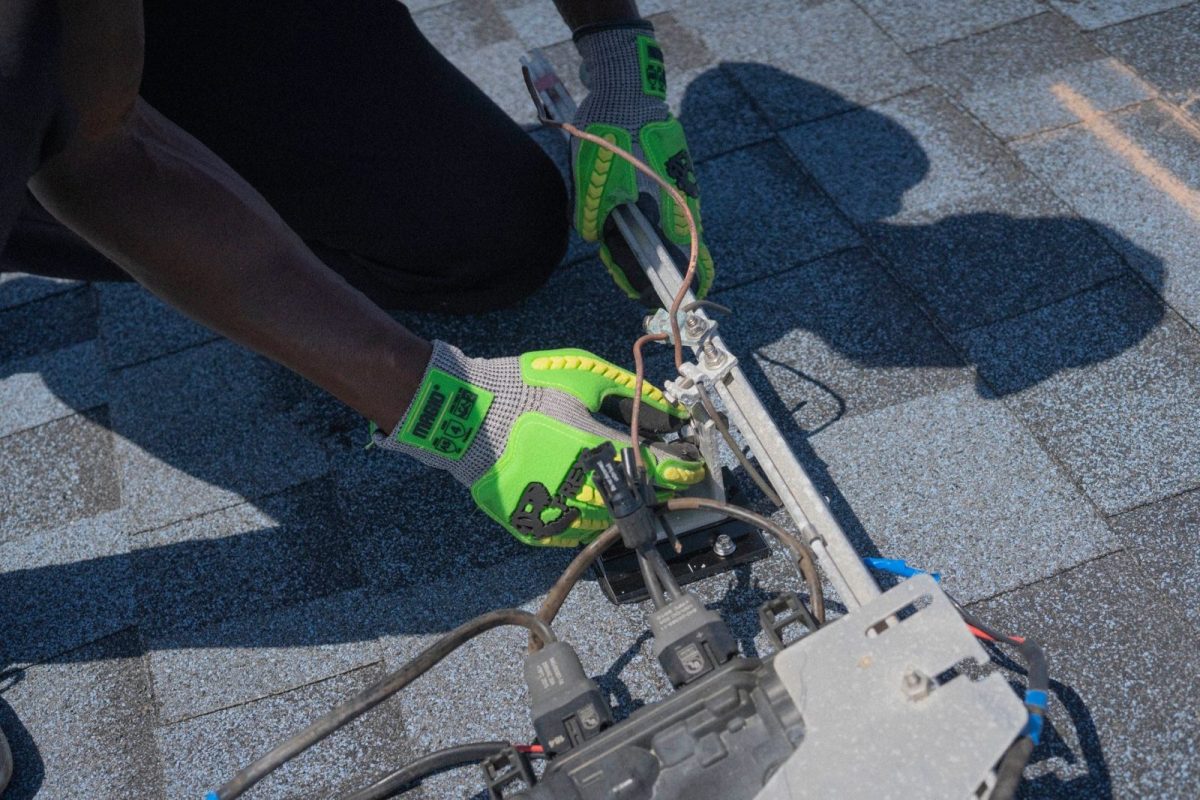
Safety warning: Panels are only half the system. The DC side of a solar array carries lethal voltage even in daylight with the inverter off. Never let an unqualified handyman connect strings, MC4 connectors, or rooftop DC cabling. Insist on a licensed installer and proper earthing, and read our disclaimer before attempting any DIY work.
A simple checklist before you buy
- Confirm the exact make, model, and wattage in writing on the quote.
- Get the datasheet and note the efficiency and temperature coefficient.
- Read both the product and performance warranty documents.
- Verify IEC certification numbers and MNRE or ALMM listing.
- Check the panels fit your shade-free roof area on paper.
- Confirm the string design sits inside your inverter's voltage window.
- Choose an installer with a service track record you can reach later.
Work through this list and you will have avoided the wrong panels that trip up most first-time buyers. For the full picture of formats, wattages, and how modules behave over time, see our complete guide to solar panels, which ties all of these decisions together.
Frequently Asked Questions
What is the most common solar panel buying mistake in India?
The single most common mistake is choosing panels purely on the lowest price per watt. That saving usually hides weaker cells, a shorter usable warranty, or a brand with no local service, so it costs far more than it saves across a 25-year system life.
Does higher wattage always mean a better panel?
No. Wattage is measured in a lab at 25 degrees Celsius, so it does not reflect performance on a hot Indian roof. Efficiency, temperature coefficient, and degradation rate often matter more, because they determine how much energy the panel actually delivers over its life.
How do I check if a solar panel is genuine and certified?
Ask for the datasheet with the exact model number, the IEC 61215 and IEC 61730 certification references, and the MNRE or ALMM approved-list entry. Verify these against official sources and match the serial-number labels on the delivered panels to your invoice before installation.
What is the difference between product and performance warranty?
The product warranty covers manufacturing defects, usually for 10 to 12 years. The performance warranty guarantees the panel still produces a set percentage of its rated output, often around 85 percent, after 25 years. Buyers should confirm both, since they protect against very different failures.
Should I buy panels separately from my installer?
Usually no. Panels must be matched to your roof area and inverter, and warranty claims are smoother when one installer owns the whole system. If you do source panels yourself, confirm compatibility on paper first and keep every invoice and datasheet for future claims.
Conclusion
Almost every solar panel buying mistake comes down to skipping the boring paperwork in the excitement of going solar. Read the datasheet, separate the two warranties, size the array to your roof and inverter, and verify the certifications, and you will already be ahead of most buyers. Take your time, ask hard questions, and treat the purchase as the 25-year commitment it really is. When you are ready to go deeper, our complete guide to solar panels is the calm, no-pressure place to start.