

Key Takeaways
- String inverters are the cheaper, simpler default for clean, unshaded south-facing roofs, which describes most Indian rooftop installs.
- Microinverters do panel-level MPPT, so they shine on shaded, multi-orientation, or complex roofs where one weak panel would otherwise drag down a whole string.
- Microinverters cost roughly 20-40% more upfront and add many small units on the roof, but give you per-panel monitoring and easy expansion later.
- Warranty and service reach matter more than spec sheets in India; a well-supported string inverter often beats a poorly-supported microinverter.
- For most 3-5 kW Indian homes with a good roof, a string inverter is the right call; microinverters earn their premium on tricky roofs.
The string vs microinverters question comes up on almost every rooftop quote I review, and homeowners often get pushed toward whichever one the installer stocks. Both convert your panels' DC into usable AC, but they do it in very different places and at very different price points. I have commissioned both types across South Indian rooftops, and the right answer depends far more on your roof than on which technology sounds fancier. In this guide you will learn how each works, where each wins, what they cost in Indian terms, and a simple way to decide for your own home.
How a string inverter works
A string inverter is one central box, usually wall-mounted near your meter. Your panels are wired in series into one or more "strings," and all that DC current flows down to the single inverter where it is converted to AC. Because the panels share a string, the whole string operates at the current of its weakest panel. It is a proven, low-cost design, and it is what the large majority of Indian rooftop systems use today.
Modern string inverters usually have two or three MPPT channels, so you can point a couple of separate strings in slightly different directions and still track each reasonably well. That is often enough for a plain L-shaped or two-facing roof. The limitation only bites when panels within the same string see different light, because the inverter cannot optimise them individually. For a clean south-facing array, that limitation almost never shows up, which is exactly why string designs dominate Indian rooftops.
How microinverters work
A microinverter is a small unit bolted under each individual panel (or shared between two panels on some models). Conversion from DC to AC happens right there on the roof, panel by panel. Because each panel has its own Maximum Power Point Tracking (MPPT), a shaded or dirty panel only loses its own output instead of pulling down its neighbours. You also get clean per-panel data, which makes fault-finding much easier down the line.
There is a safety angle too. Because a microinverter array carries AC across the roof rather than long runs of high-voltage DC, there is no live DC string sitting on the roof during daylight. Some homeowners like that, especially in dense neighbourhoods. The trade-off is that you now have many small electronic units exposed to Indian rooftop heat, and the wiring harness that links them all is a bit more involved to install correctly.
String inverter vs micro: the core trade-off
The whole debate boils down to where conversion and MPPT happen. String inverters centralise everything into one affordable, serviceable box but tie panels together electrically. Microinverters distribute the work so every panel is independent, at the cost of more hardware on the roof and a higher price. Neither is "better" in the abstract; the right pick depends on shade, roof shape, budget, and how much monitoring you want.
| Factor | String inverter | Microinverter |
|---|---|---|
| MPPT level | Per string (1-3 zones) | Per panel |
| Upfront cost | Lower (baseline) | ~20-40% higher |
| Shade tolerance | Weak; one shaded panel hurts the string | Strong; loss stays with that panel |
| Monitoring | System or string level | Individual panel level |
| Roof hardware | One central box | One unit per panel |
| Expandability | Limited by inverter sizing | Easy, add panels one at a time |
| Serviceability | One accessible unit at ground level | Multiple units on the roof |
| Typical best fit | Clean, unshaded, single-orientation roofs | Shaded, multi-facing, complex roofs |
Shading and roof complexity: the real decider
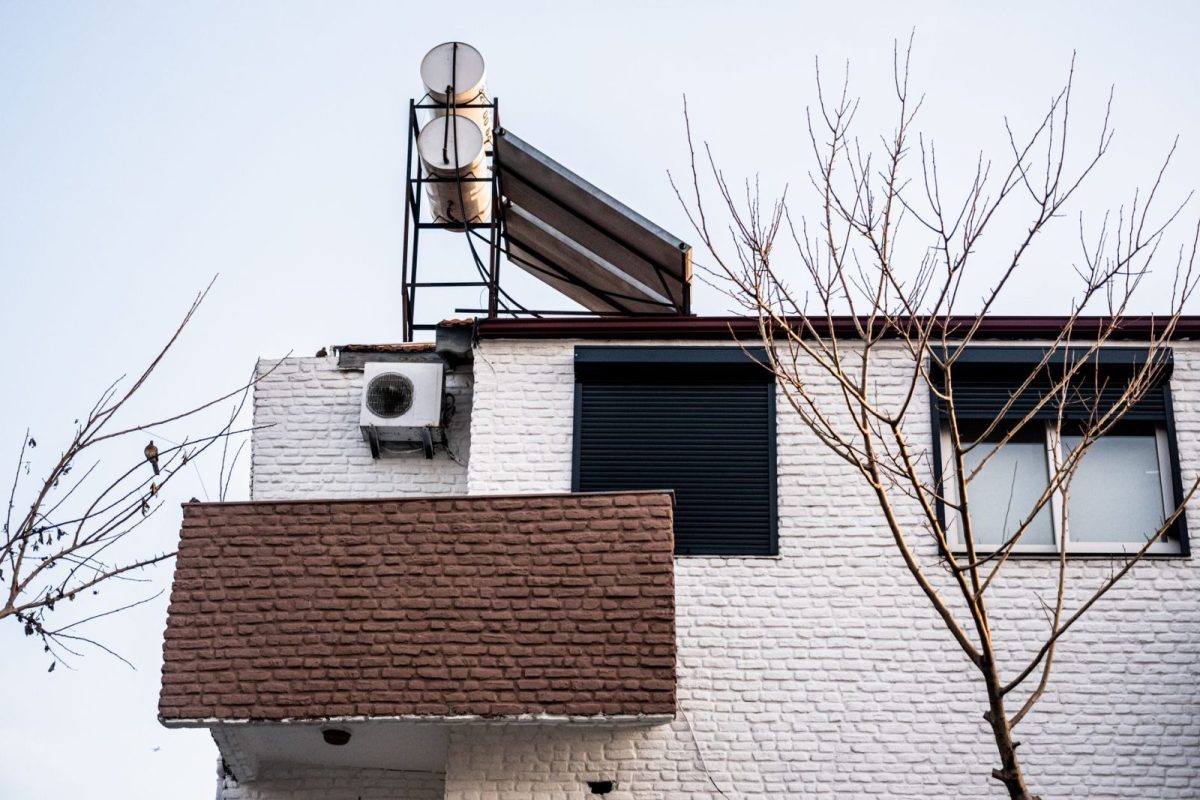
This is where the microinverter comparison actually matters. When I commissioned a system on a Bengaluru home with a water tank and a neighbour's parapet throwing afternoon shade, the string design kept underperforming in the evenings because two shaded panels dragged the whole string down. Switching that array to microinverters recovered the shaded panels' neighbours cleanly. On a plain, unshaded roof, that same premium would have bought you almost nothing extra.
Tip: Before choosing, walk your roof at 9 AM, noon, and 4 PM and note any shadow from tanks, parapets, chimneys, or trees. If panels will be shaded at different times, that is the strongest signal to consider microinverters or panel-level optimisers.
Cost in Indian terms
On a typical 3 kW residential system, a good string inverter is the budget-friendly baseline and keeps your total install cost lowest, which matters when you are also claiming the MNRE rooftop subsidy that is calculated on system capacity. Microinverters add a meaningful premium because you are buying many small units instead of one. The payback logic is simple: if microinverters recover enough shaded or mismatched energy to offset that premium over the system life, they are worth it; if your roof is clean, they usually are not.
Monitoring, maintenance and lifespan
Microinverters give you per-panel visibility, so if one panel drops off you see exactly which one, without climbing the roof to guess. Their spread-out design also means no single point of failure taking the whole system offline. The flip side is that any unit needing replacement is up on the roof in the heat and monsoon, whereas a string inverter is one accessible box you can swap at ground level. Over a decade, service access in your town can matter as much as the datasheet.
Safety warning: Both systems involve DC wiring, mains AC, and roof work. Microinverter arrays still carry AC across the roof, and string arrays carry high-voltage DC. Never open an inverter, join DC connectors, or work on the roof yourself. Use an MNRE-empanelled installer and insist on proper earthing and DC isolators.
Which inverter is better for your home?
Here is the honest short answer to "which inverter is better": for most Indian homes with a clean, single-orientation, unshaded roof and a normal budget, a string inverter wins on cost and simplicity. Choose microinverters when your roof is shaded, faces multiple directions, has an odd shape, or when you value per-panel monitoring and plan to expand panel by panel later.
A quick way to decide
- Map your roof shade at three times of day and count how many panels get shaded.
- Check if all panels can face the same direction at the same tilt; if not, lean toward micros.
- Get quotes for both and compare the price gap against the shaded energy you would actually recover.
- Weigh local service reach, then confirm warranty terms before signing.
If you are still weighing whole-system architecture, it also helps to understand inverter sizing choices like the DC:AC ratio and inverter oversizing, and how a hybrid vs string inverter decision fits if you also want battery backup. For the full picture, start with our complete guide to solar inverters.
For standards on inverter safety and grid connection, the Ministry of New and Renewable Energy and the National Renewable Energy Laboratory are solid, non-commercial references.
Frequently Asked Questions
Are microinverters worth the extra cost in India?
They are worth it when your roof is shaded, faces multiple directions, or is oddly shaped, because they recover energy a string design would lose. On a clean, unshaded, single-orientation roof, the premium usually does not pay back, and a string inverter is the smarter buy.
Do microinverters last longer than string inverters?
Microinverters typically carry longer warranties, often 20-25 years, versus roughly 5-12 years for many string inverters. But they sit on a hot roof, and any failure needs roof access to fix. Real-world lifespan depends heavily on heat, install quality, and local service support.
Can I mix string inverters and microinverters?
You would not mix them on the same panels, but you can zone a roof: use microinverters on the shaded or awkward section and a string inverter on the clean section. This is uncommon on small homes because it adds cost and complexity, but it can make sense on larger split roofs.
Which is better for a small 3 kW home system?
For a typical 3 kW home with a clean, unshaded roof, a string inverter is usually the better choice on cost and simplicity. Only move to microinverters if that small roof has real shade issues or you specifically want per-panel monitoring and easy future expansion.
Do microinverters need more maintenance?
Not more frequent maintenance, but harder maintenance. Per-panel monitoring means you spot faults quickly, and one failure does not stop the whole system. However, any repair happens on the roof rather than at a ground-level box, so factor in installer access and safety when you decide.
The bottom line
String vs microinverters is not about which technology is superior; it is about matching the design to your roof. Clean, unshaded, single-facing roofs favour the cheaper, simpler string inverter, while shaded and complex roofs justify the microinverter premium and its panel-level control. Walk your roof, get both quotes, and weigh the price gap against the energy you would actually recover. When you are ready to go deeper, read our complete guide to solar inverters, and see our disclaimer for how to use this advice responsibly.