

Key Takeaways
- Most apartments go solar on the common roof first, powering lifts, water pumps, and corridor lights rather than individual flats.
- Three routes exist: a society-owned common-area plant, individual flat systems where roof space allows, and virtual or group net metering that splits credits across meters.
- Your Resident Welfare Association usually needs a general body resolution before the DISCOM will accept a net metering application.
- Under PM Surya Ghar, group housing societies get a central subsidy of ₹18,000 per kW on common-facility solar, up to 500 kWp.
- A RESCO or OPEX model lets a developer fund the plant while the society just pays a lower per-unit tariff, avoiding upfront cost.
Solar for apartments is a different animal from bolting panels onto a bungalow. When I first quoted a 14-storey society in Pune, the secretary assumed each flat would get its own panels. That is rarely how it works. The roof of a tall building is small relative to the number of homes under it, so the maths pushes you toward powering shared loads first. Once you understand who owns the roof, whose electricity bill the panels offset, and how your state DISCOM handles credits, the whole thing gets a lot simpler.
Why apartment solar works differently
A standalone house has one roof, one owner, one electricity meter. An apartment complex has one roof shared by dozens of families, plus a separate common-area meter for lifts, pumps, and lighting. That single fact reshapes every decision.
Take roof area. A four-floor building with eight flats might have enough terrace for a 10 kW system, which is workable. A 20-floor tower with 80 flats has almost the same roof but ten times the homes. There is simply no way to give each flat a meaningful private array. So the roof becomes a community asset, and the smart move is to feed the loads that every resident pays for through their maintenance bill.
Three ways an apartment can go solar
1. Common-area plant owned by the society
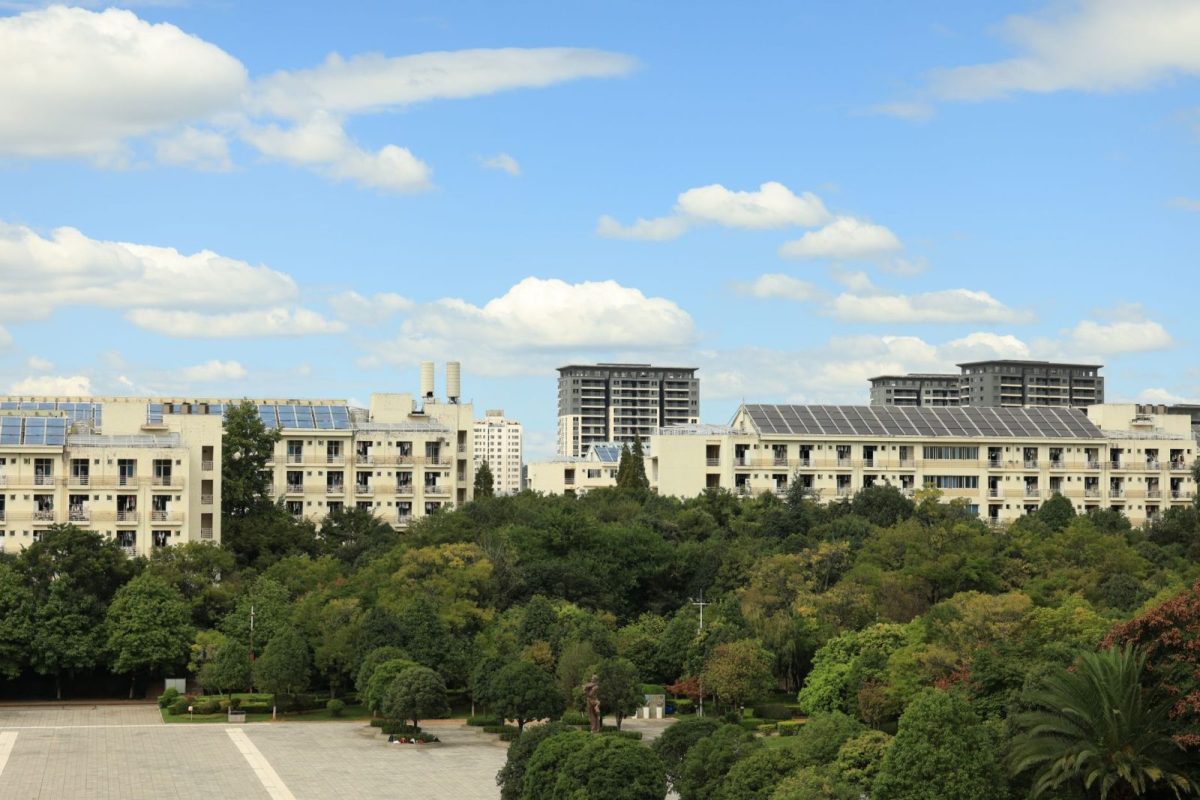
This is the most common and the easiest to approve. The society installs a rooftop plant wired to the common-area meter. It offsets the electricity that runs lifts, borewell and pressure pumps, the sewage treatment plant, corridor and basement lighting, and increasingly EV chargers. Since every flat contributes to these bills through maintenance, everyone benefits proportionally without any messy per-flat accounting.
2. Individual flat systems
Where a building is low-rise and the terrace is generous, or where penthouse and top-floor owners have exclusive roof rights, individual grid-tied systems are possible. Each participating flat gets its own small array and net meter. This works for row-house style societies and small buildings, but in a dense tower it collapses under the roof-area problem above.
3. Virtual or group net metering
A few states allow the energy from one rooftop plant to be credited across several meters. Group net metering assigns surplus from one connection to other connections of the same owner. Virtual net metering lets a shared plant split its generation credits among many participating members by a pre-agreed ratio. Availability depends entirely on your state regulator, so confirm with your DISCOM before you promise residents anything.
What the shared roof can actually power
Before sizing anything, pull twelve months of common-area electricity bills. That daytime consumption is your target, because a grid-tied system without batteries only saves money when the sun is up and the loads are running. Here is roughly how common loads stack up in a mid-size society.
| Common load | Runs mostly | Solar fit |
|---|---|---|
| Water and booster pumps | Morning and evening | Good, shift pump timers to midday |
| Lifts | All day | Excellent, steady daytime draw |
| Corridor and basement lights | Evening and night | Poor without a battery |
| Sewage treatment plant | Cycles through the day | Very good baseload match |
| EV chargers | Flexible | Good, schedule charging for daytime |
The trick I use on every society job is to move as much load as possible into daylight hours. Setting the STP and water pumps to run between 10 am and 4 pm can lift self-consumption from around 50 percent to 80 percent, which directly improves the payback. For a fuller picture of how sizing, tilt, and load matching come together, our guide on how to design a solar system walks through the whole method.
Tip: Ask your installer to size the plant to your daytime common-area load, not your peak connected load. Oversizing a grid-tied system that exports cheaply into net metering just extends the payback with little extra benefit.
Getting your society on board
The engineering is the easy part. The approval path is where most society projects stall. Here is the sequence I hand to every managing committee.
- Collect the last 12 months of common-area bills and get a rooftop shadow survey done. Water tanks, lift machine rooms, and parapet walls throw shade you must plan around.
- Invite two or three vendors to quote both a CAPEX (society buys) and a RESCO (developer owns, you pay per unit) option.
- Put the proposal to the general body meeting and pass a resolution authorising the installation and the net metering application. The DISCOM will ask for this.
- Confirm the sanctioned load and available roof rights, and check that your building structure can carry the panel and ballast weight.
- File the net metering application with your DISCOM, register on the national portal if claiming subsidy, and schedule the feasibility inspection.
- Install, get the bidirectional meter fitted, and commission after the DISCOM inspection.
Safety warning: Rooftop DC wiring and the connection into the common-area mains must be done by a licensed electrician. High-voltage DC strings and grid tie-in carry real shock and fire risk. Insist on proper DC isolators, earthing, and surge protection, and never let untrained maintenance staff open the inverter or combiner box.
Subsidy and the money side
Housing societies get a specific deal under the national scheme. For group housing societies and resident welfare associations, PM Surya Ghar offers central financial assistance of ₹18,000 per kW on solar serving common facilities, capped at 500 kWp and calculated at up to 3 kWp per house in the society. That is a meaningful chunk off the capital cost for the shared plant.
On funding, you have two clean choices.
| Model | Who owns the plant | Society pays | Best when |
|---|---|---|---|
| CAPEX | The society | Full cost upfront, then near-free power | Corpus is healthy and you want maximum long-term savings |
| RESCO / OPEX | The developer | A fixed per-unit tariff, no capital outlay | You want savings from day one with zero investment |
Under CAPEX the society claims the subsidy and enjoys the cheapest lifetime power, typically breaking even in four to six years. Under RESCO the developer takes the subsidy and depreciation benefit and simply bills you a tariff below the grid rate, so the society saves without touching its sinking fund. Many committees prefer RESCO for the first project because it needs no vote on spending reserves. To sanity-check the numbers for your building, compare against the figures in our rooftop solar cost and ROI breakdown.
A quick sizing example
Say a society burns 900 units a month on its common-area meter, mostly during the day. In most of India a 1 kW rooftop system generates roughly 120 to 130 units a month. So a 7 kW plant covers that consumption comfortably. At a rough installed cost of ₹55,000 to ₹65,000 per kW before subsidy, that is around ₹4 lakh, minus about ₹1.26 lakh of subsidy at ₹18,000 per kW, landing near ₹2.75 lakh net. Against a common-area bill of ₹8,000 to ₹10,000 a month, the payback sits comfortably inside five years, and the panels keep producing for 25.
Societies that also run diesel gensets during outages often ask whether a battery makes sense. For backup economics on that specific question, our comparison of a solar battery versus a diesel generator lays out where each one wins.
Frequently Asked Questions
Can a single flat owner install solar without society approval?
Not on the shared terrace. The roof is common property, so any installation there needs a society resolution. A top-floor owner with exclusive roof rights in the sale deed has more room, but should still inform the managing committee and file a net metering application with the DISCOM.
Does rooftop solar reduce each flat's individual electricity bill?
A common-area plant reduces the society maintenance bill, not your private meter. You benefit through lower maintenance charges. Only individual flat systems or virtual net metering, where allowed, can directly credit your personal electricity connection.
How much roof space does a society plant need?
Budget roughly 90 to 100 square feet of unshaded roof per kW for standard panels. A 7 kW plant needs about 650 square feet clear of water tanks, lift rooms, and their shadows. A shadow survey across the day tells you the real usable area.
Is a battery worth it for an apartment society?
Usually not for the first project. A grid-tied plant offsetting daytime common loads pays back fastest. Batteries only make sense if you want to run essential loads like lifts and water pumps through frequent outages, and they roughly double the cost.
What happens to the plant if members change?
A society-owned or RESCO plant belongs to the association or developer, not to any individual, so it stays with the building regardless of who moves in or out. The general body resolution and the DISCOM agreement carry over to the managing committee of the day.
Where to start
Apartment solar rewards patience with paperwork more than technical wizardry. Get the common-area bills, run a shadow survey, put a clean CAPEX-versus-RESCO proposal to your general body, and let the shared loads do the saving. Start with the load-first sizing approach and you will not oversize or overspend. When you are ready to plan the actual system, our guide on designing a solar system the right way will take you from roof survey to a properly matched plant.